The Sacred Geometry of Music
by Andrew Lorimer
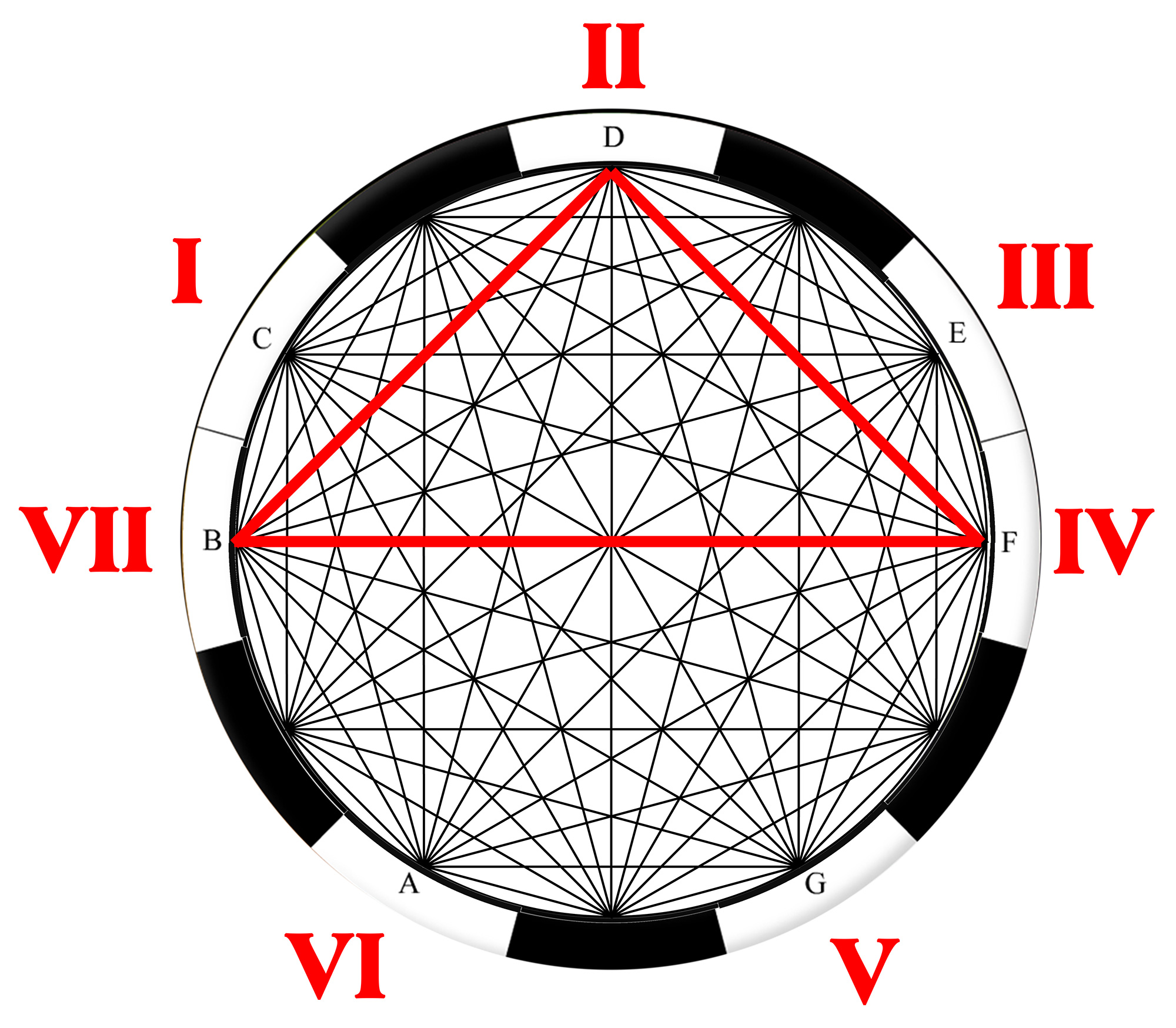
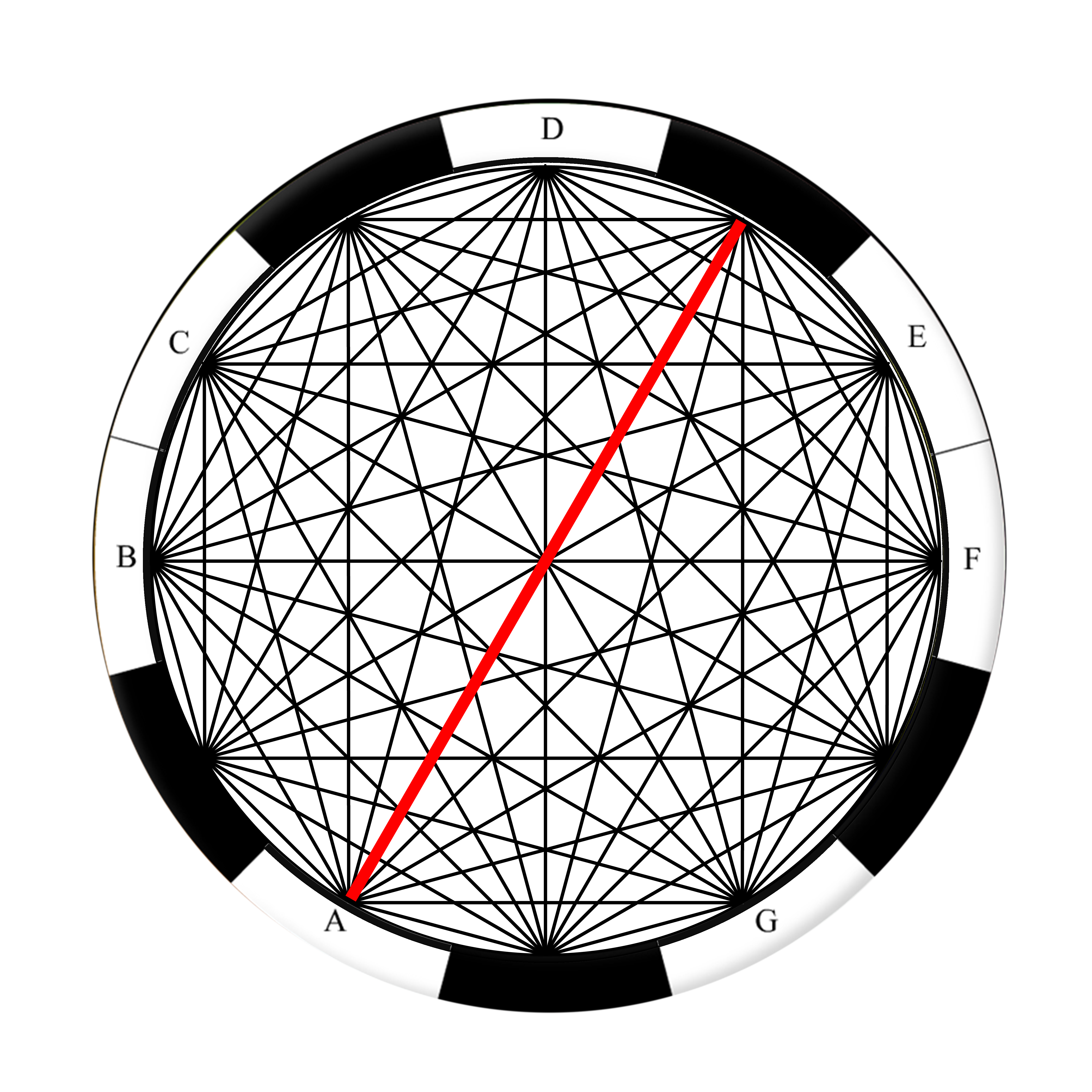
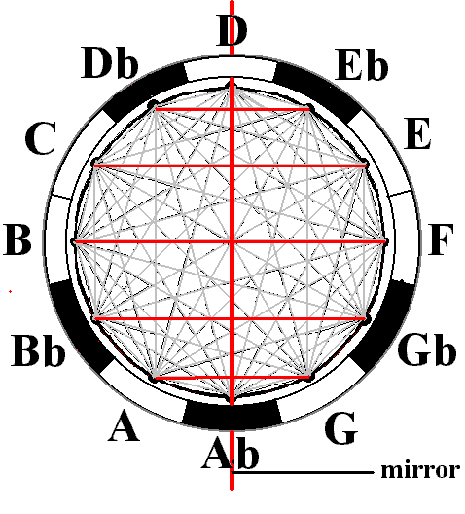
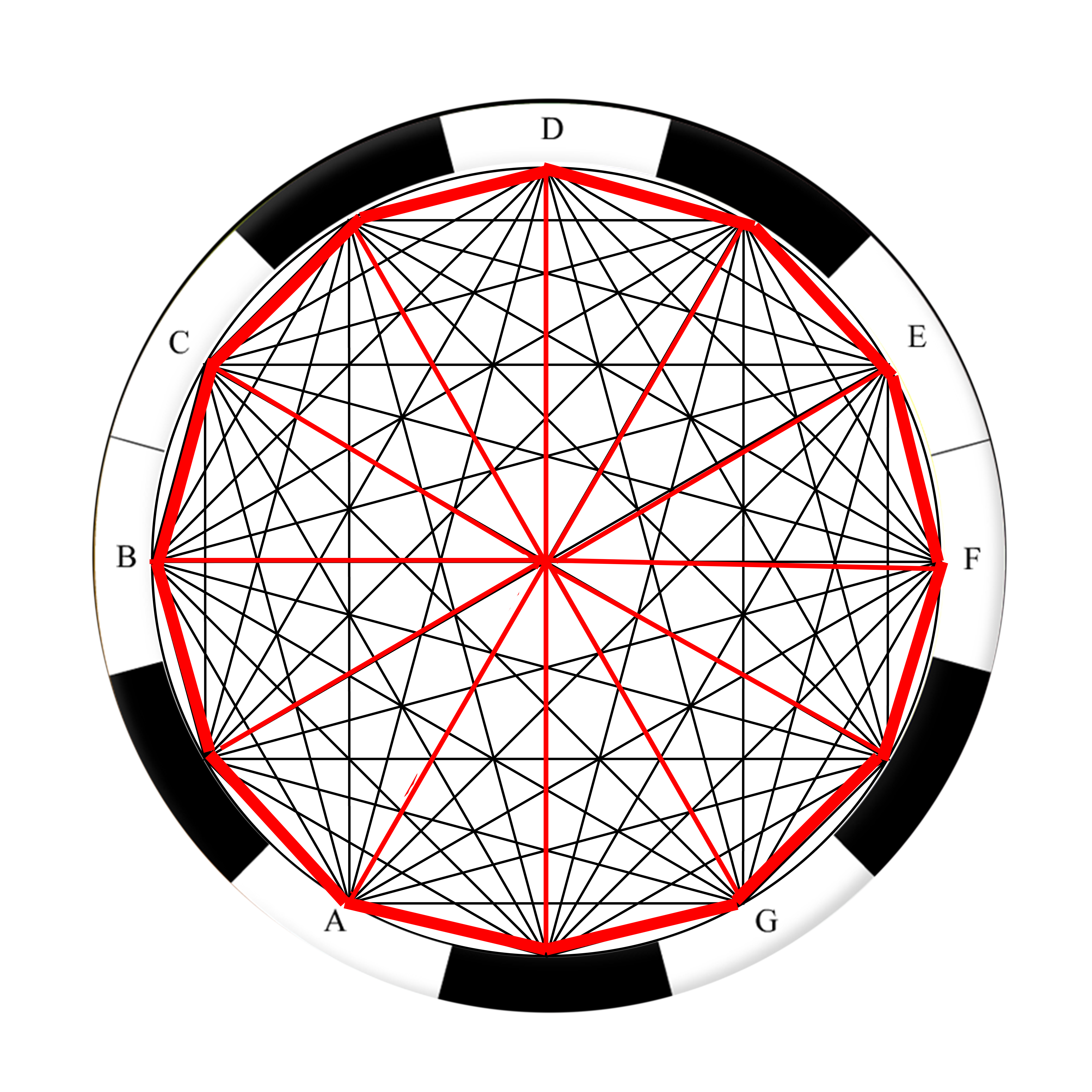
When measuring music, the circle represents an octave divided evenly into 12 semitones. The Harmonisphere measures pitch clockwise up and counterclockwise down. These twelve notes make up the building blocks for diatonic music. When set symmetrically, the twelve notes fit around the clock like this:
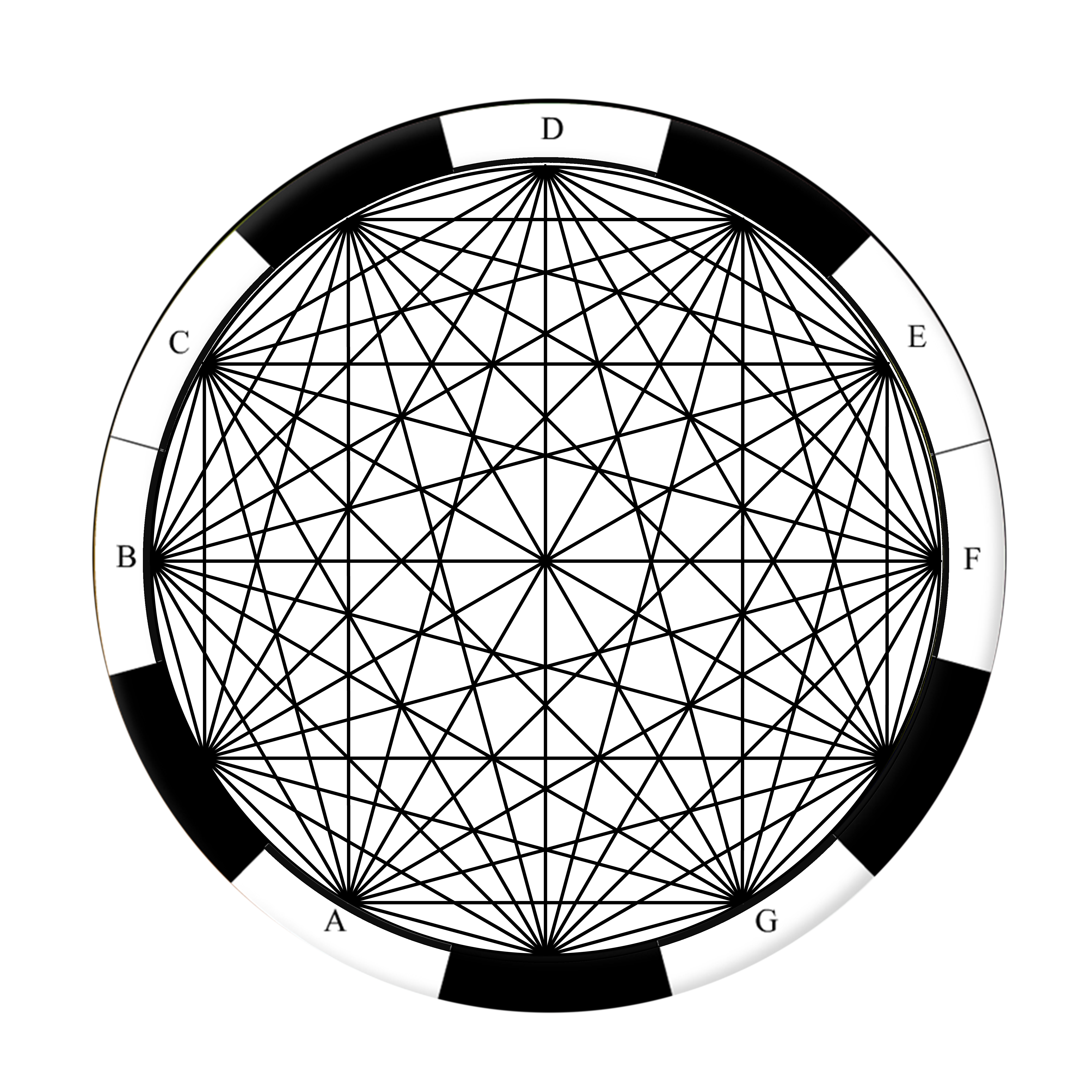
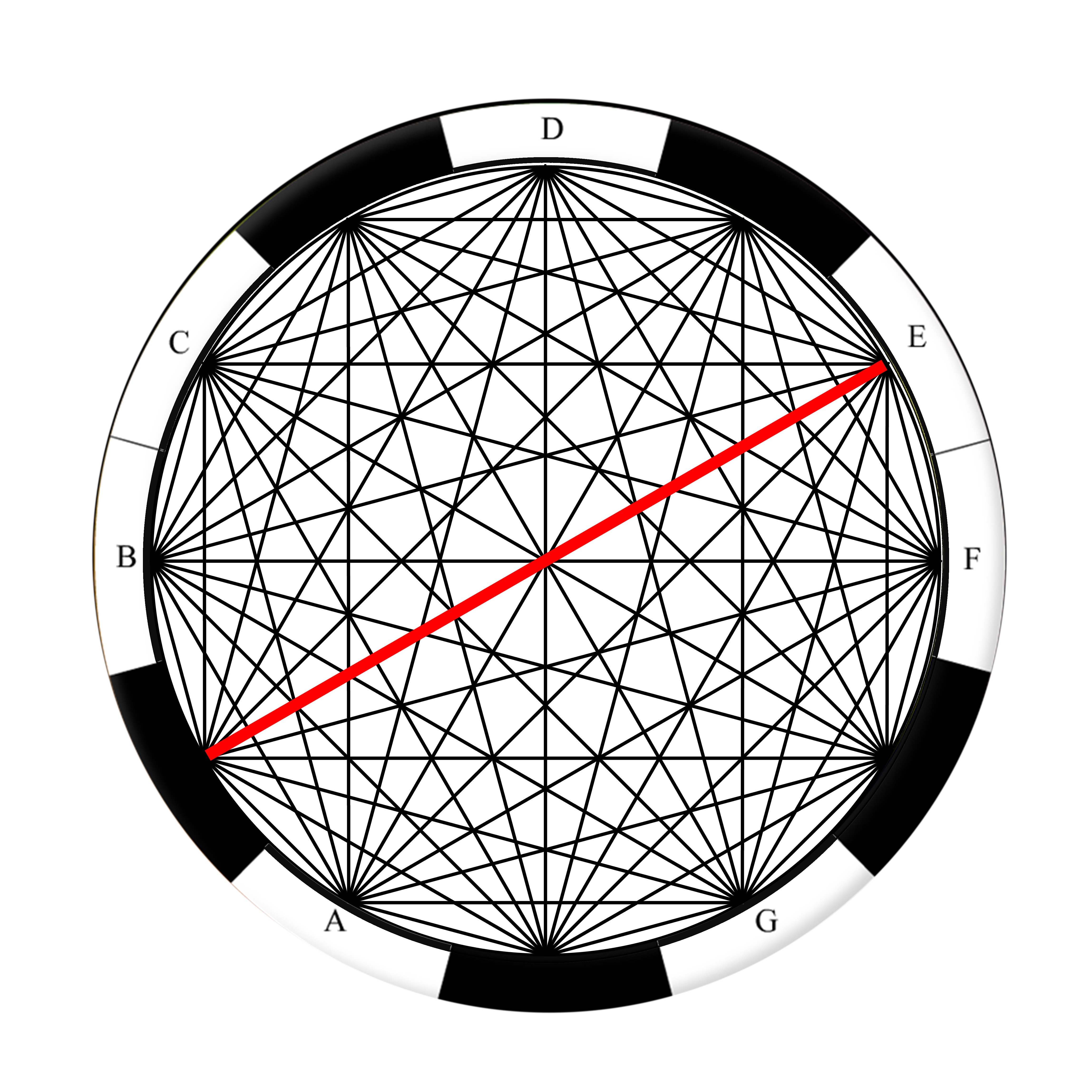
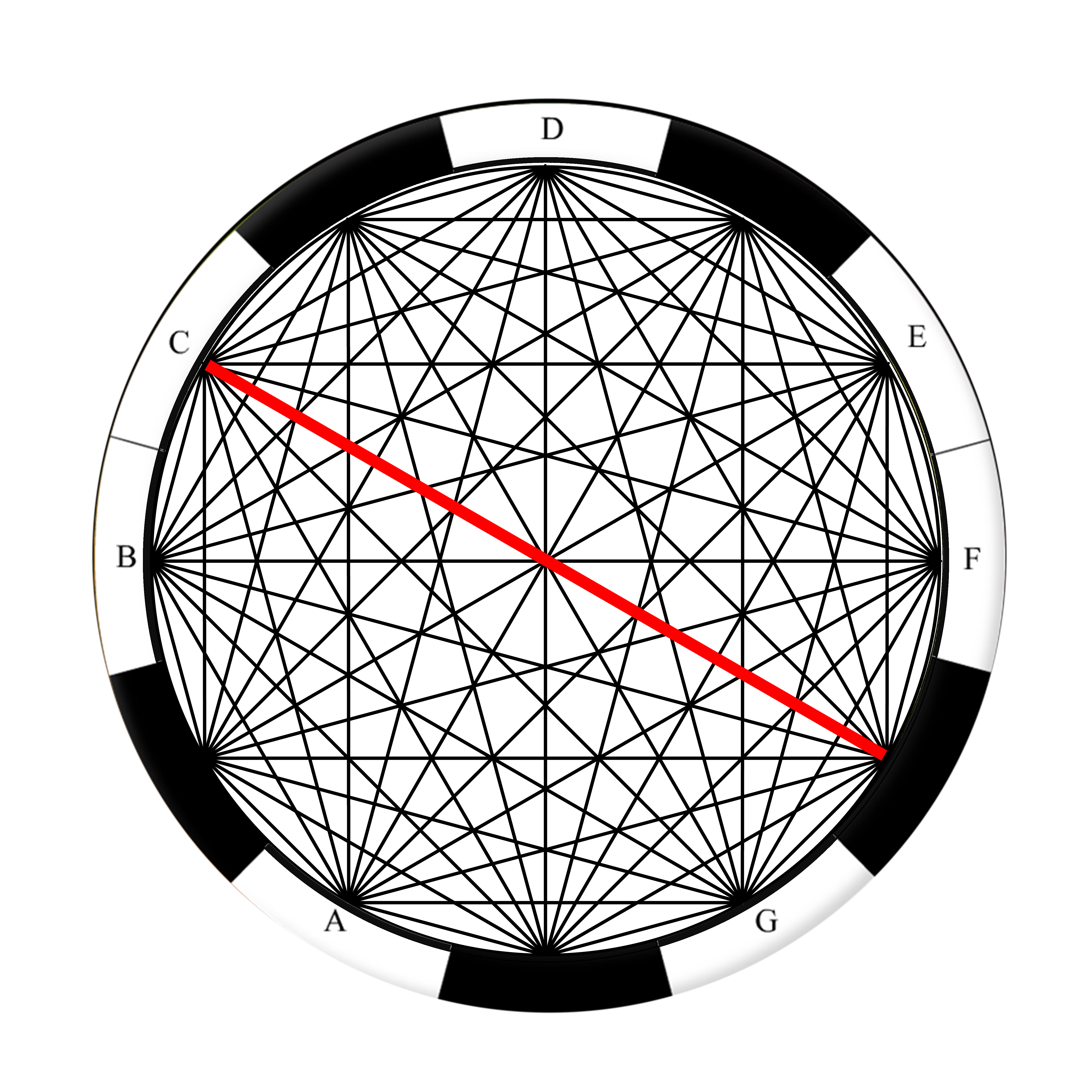
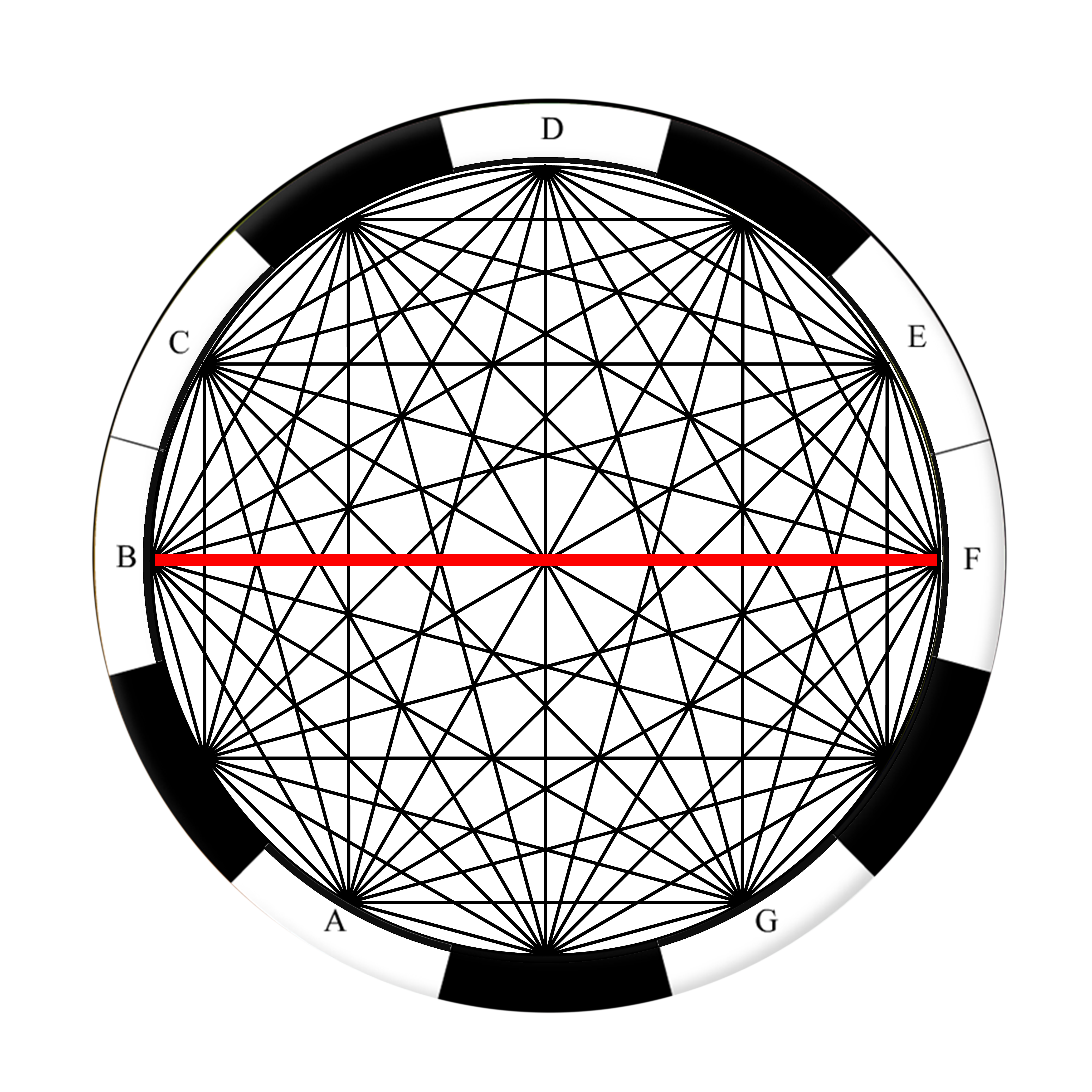
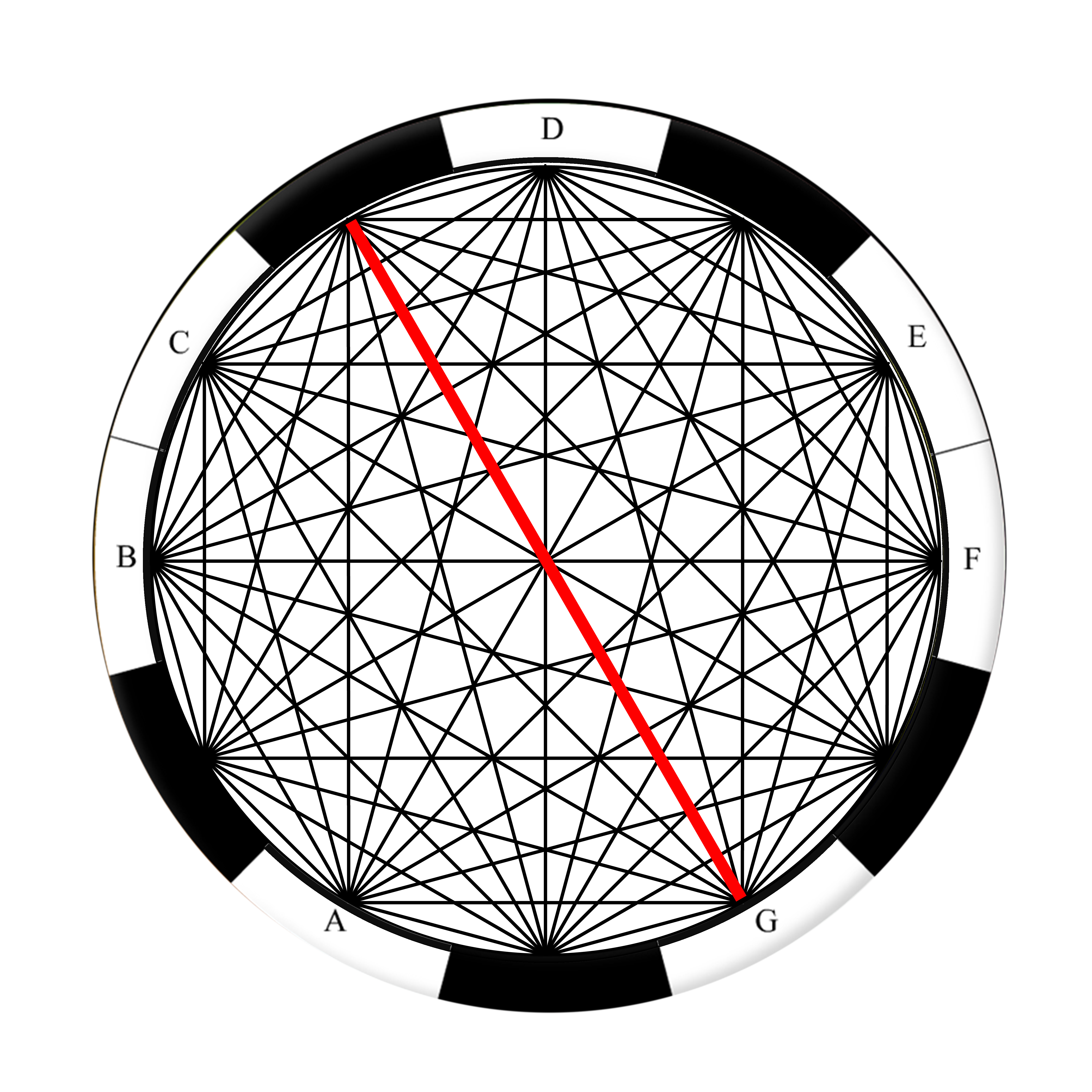
The math with intervals is interesting when you measure the same interval repeating:
1 - semitone (minor 2nd)- this is a chromatic scale that hits each number once before repeating (1x12=12):
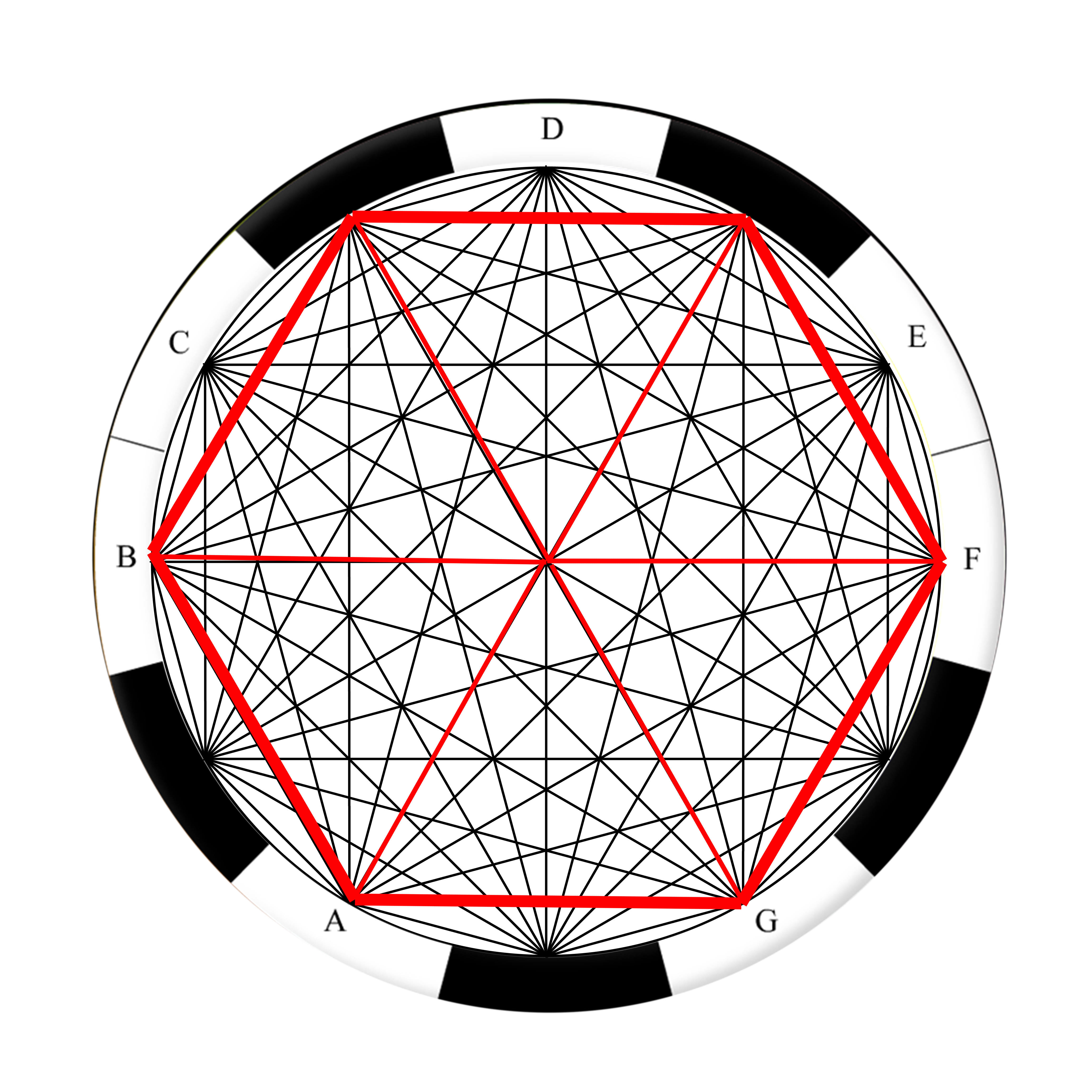
2 - whole tone, major 2nd (2 semitones) - this is a whole tone scale and has six notes before repeating the same six notes. There are two whole tone scales (2x6=12):
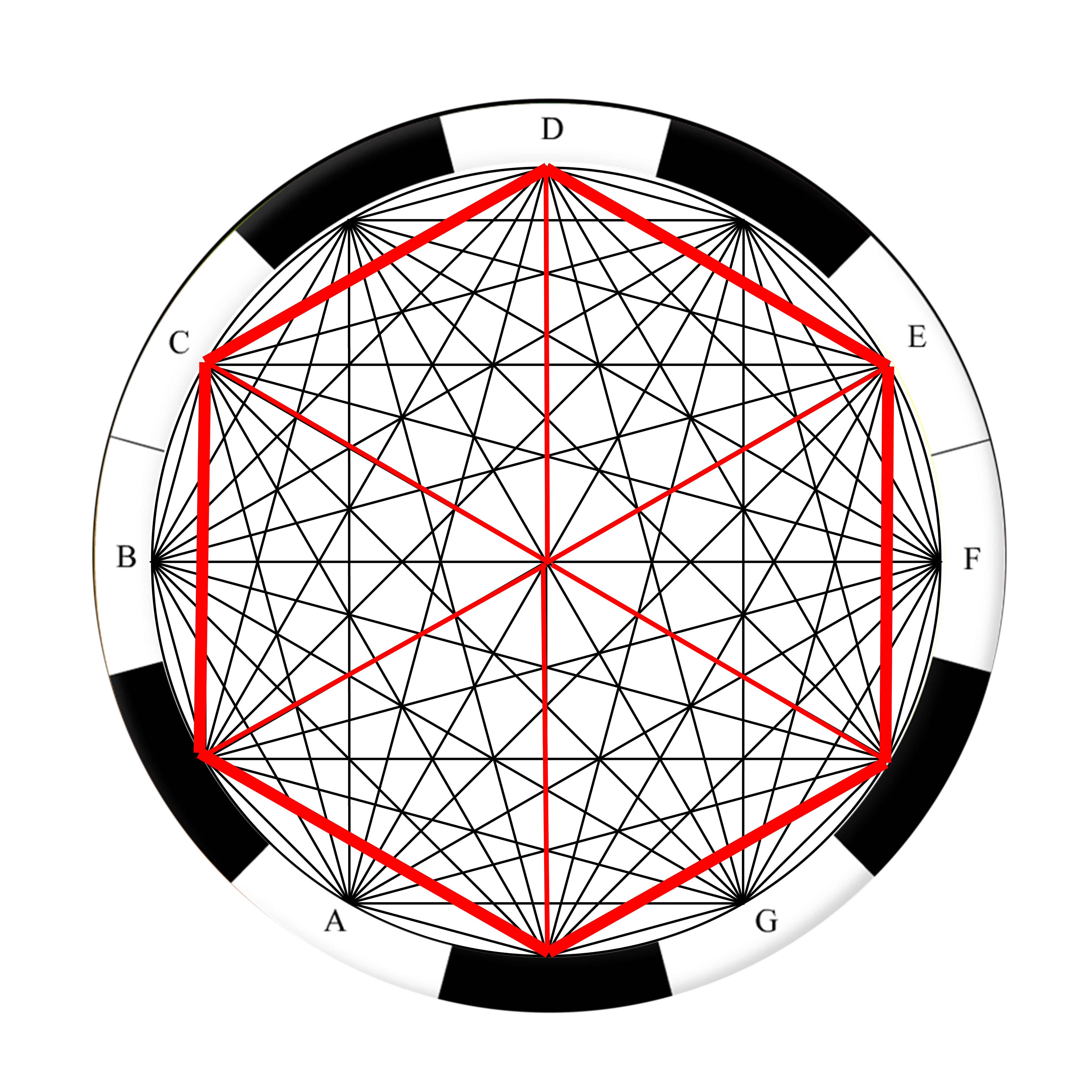
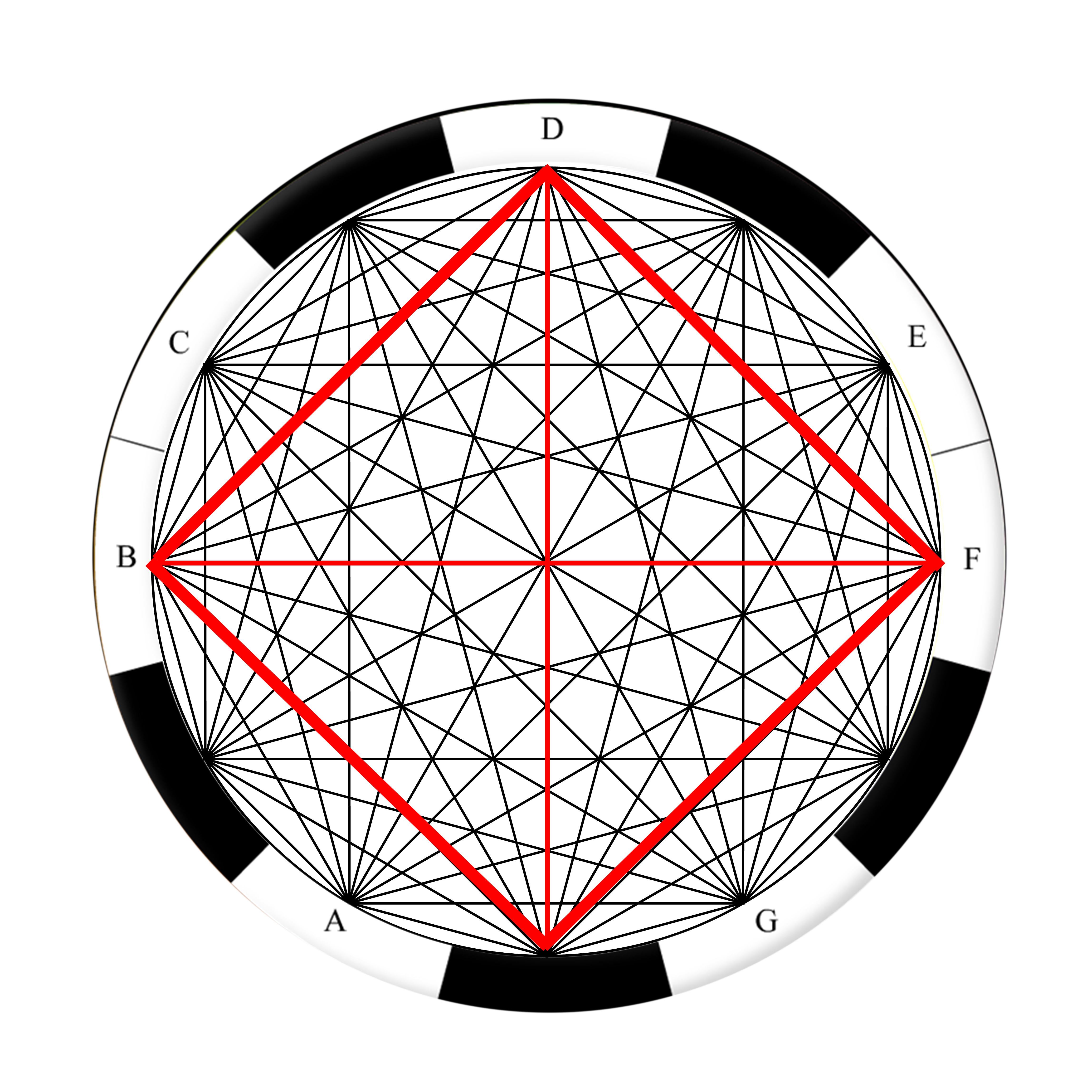
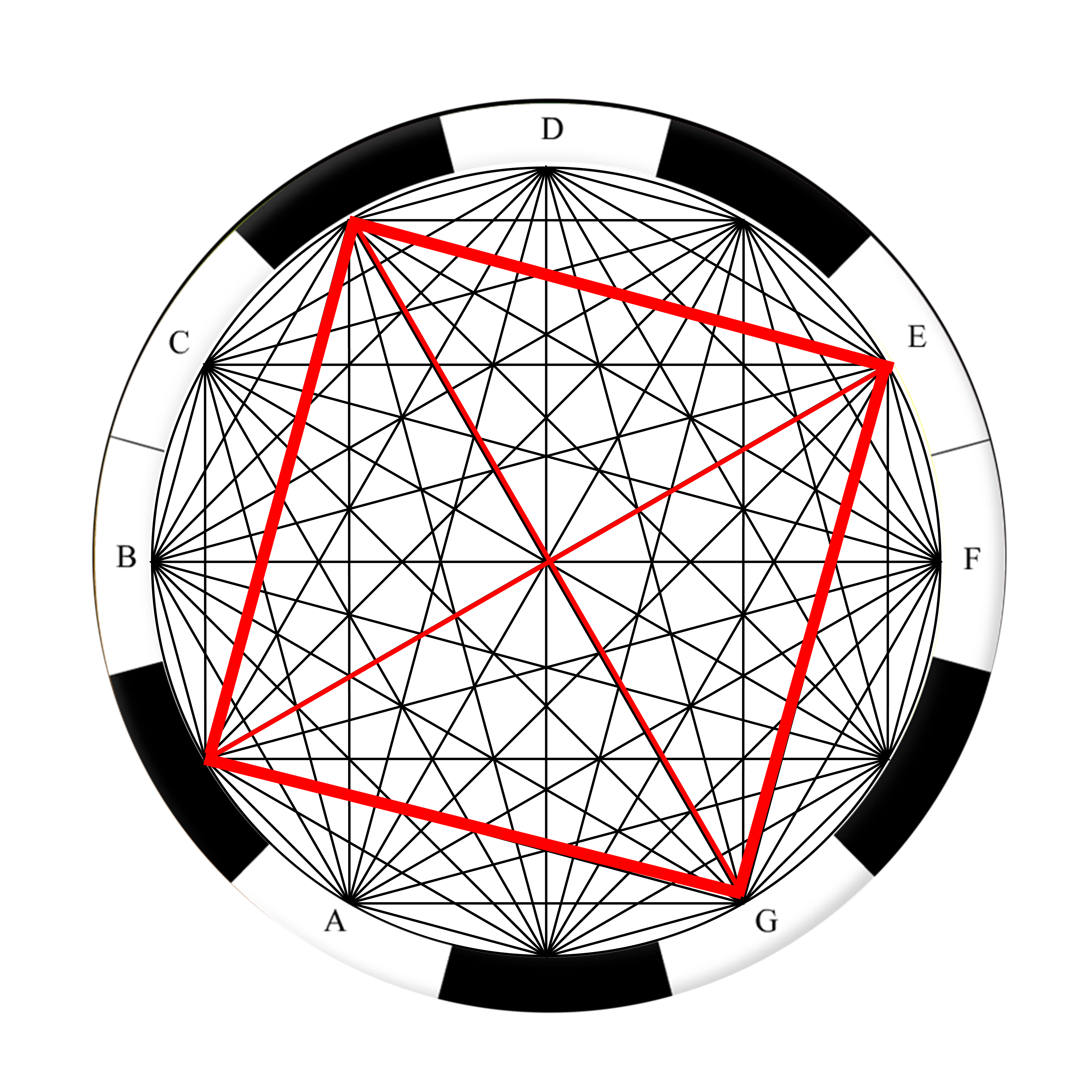
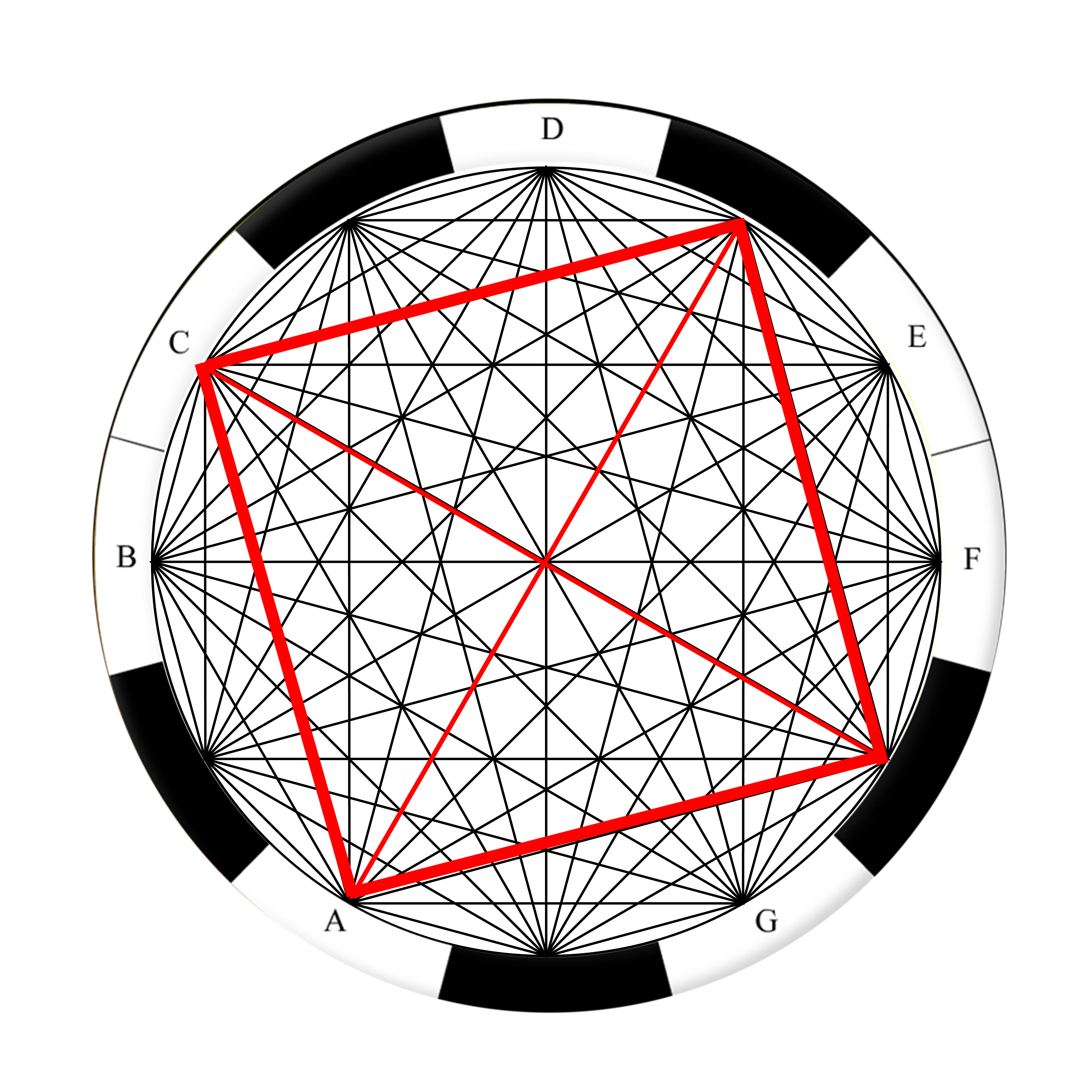
3 - minor 3rd (3 semitones) -this is a diminished 7th chord. It plays 4 notes before repeating. It divides the circle evenly in 4. There are 3 diminished 7th chords (4x3=12):
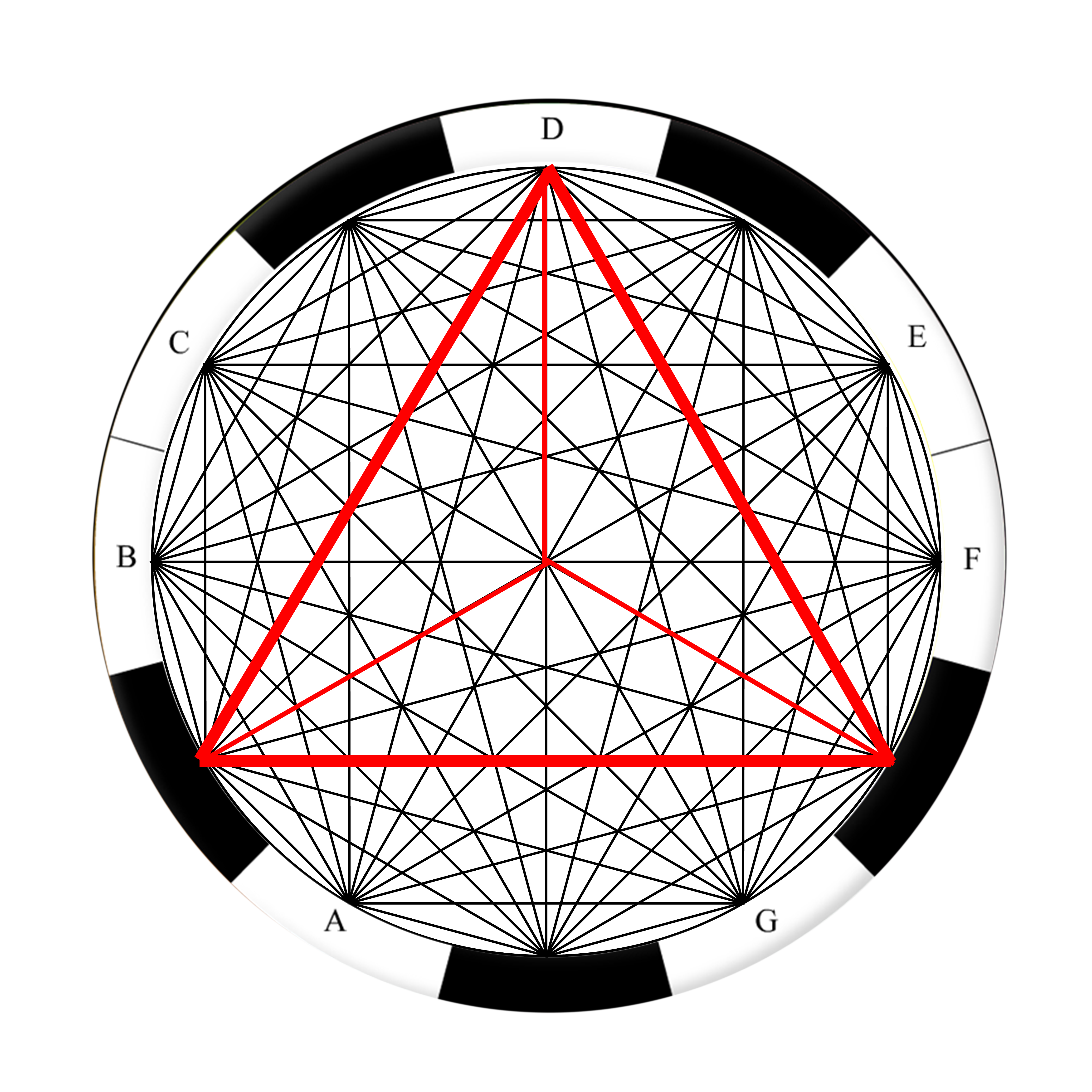
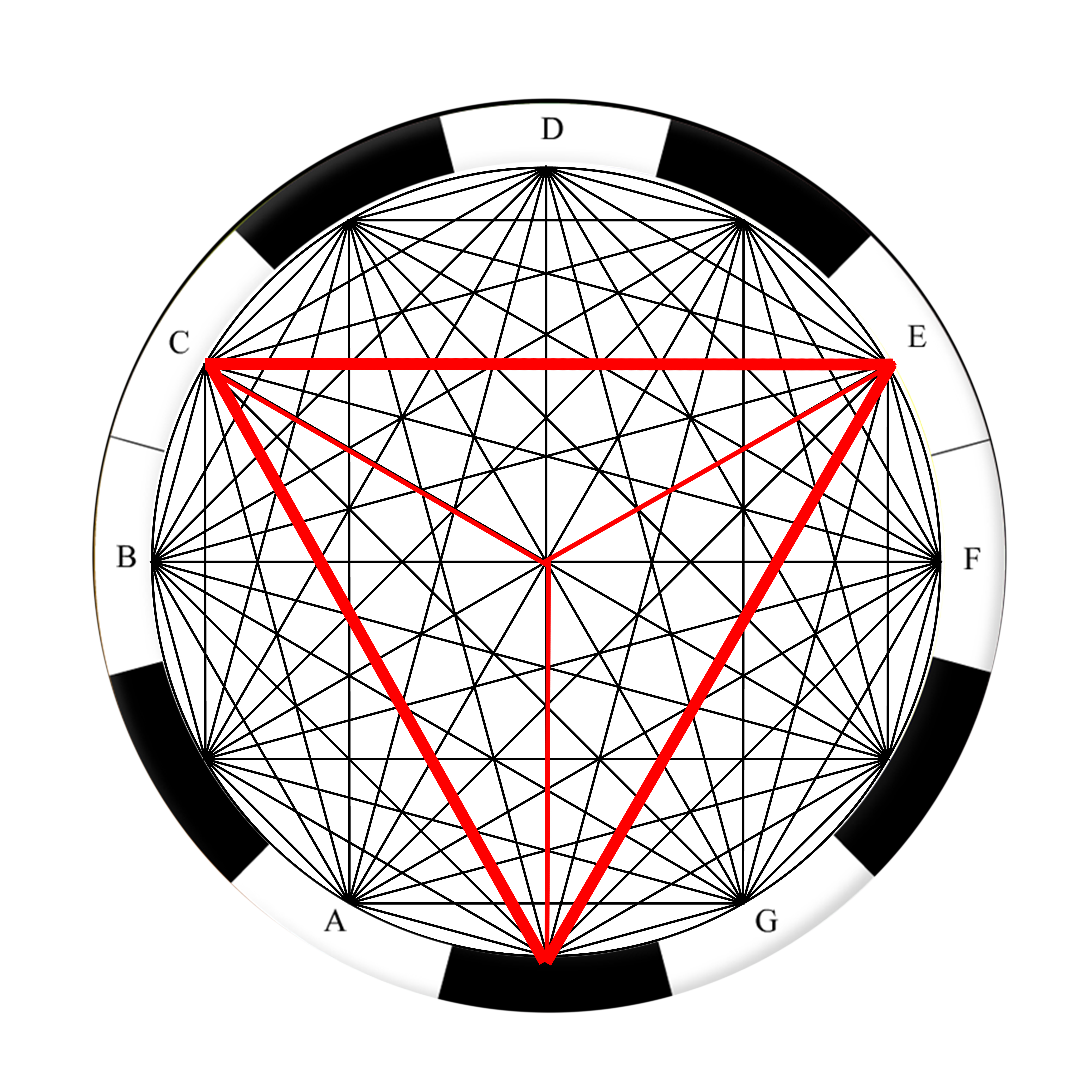
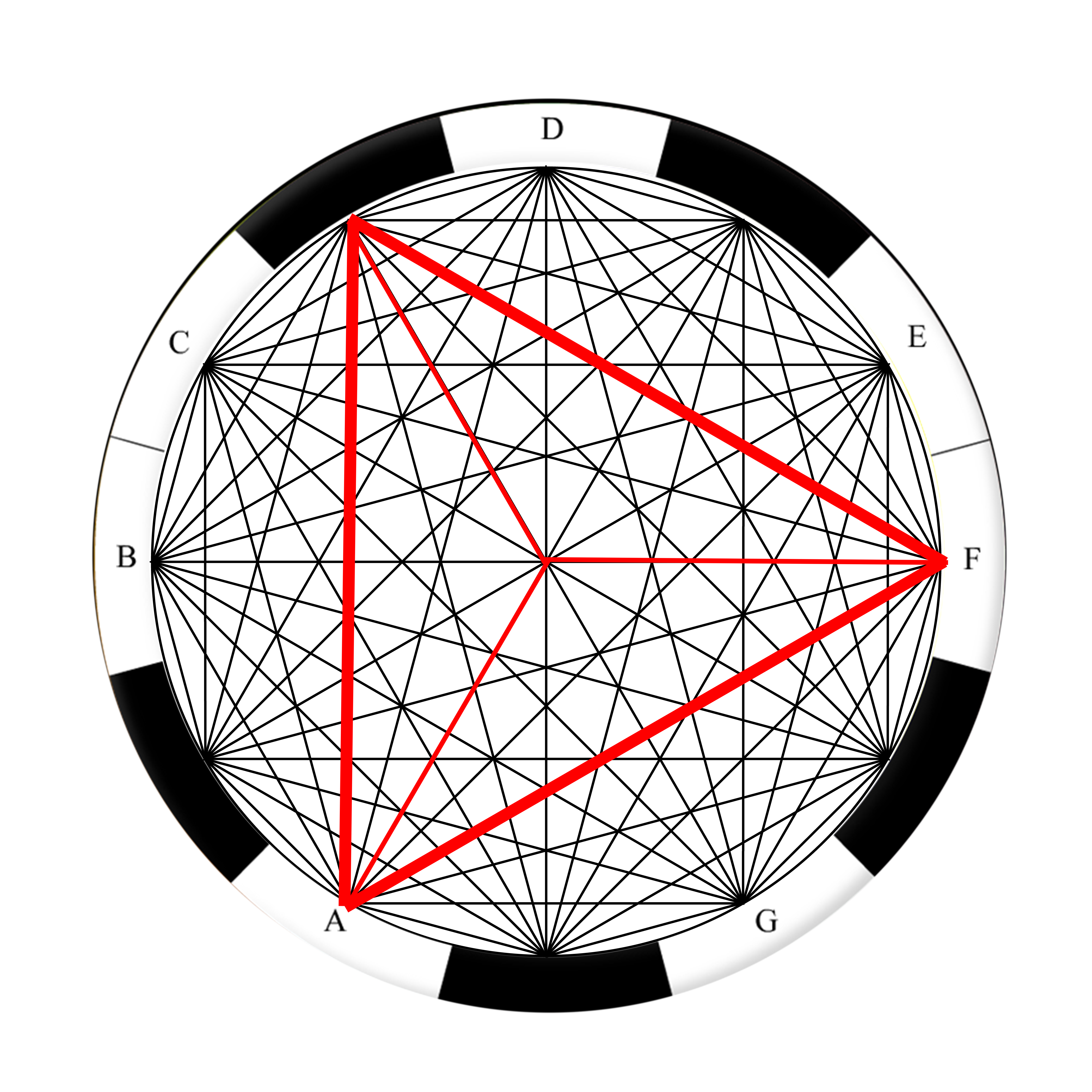
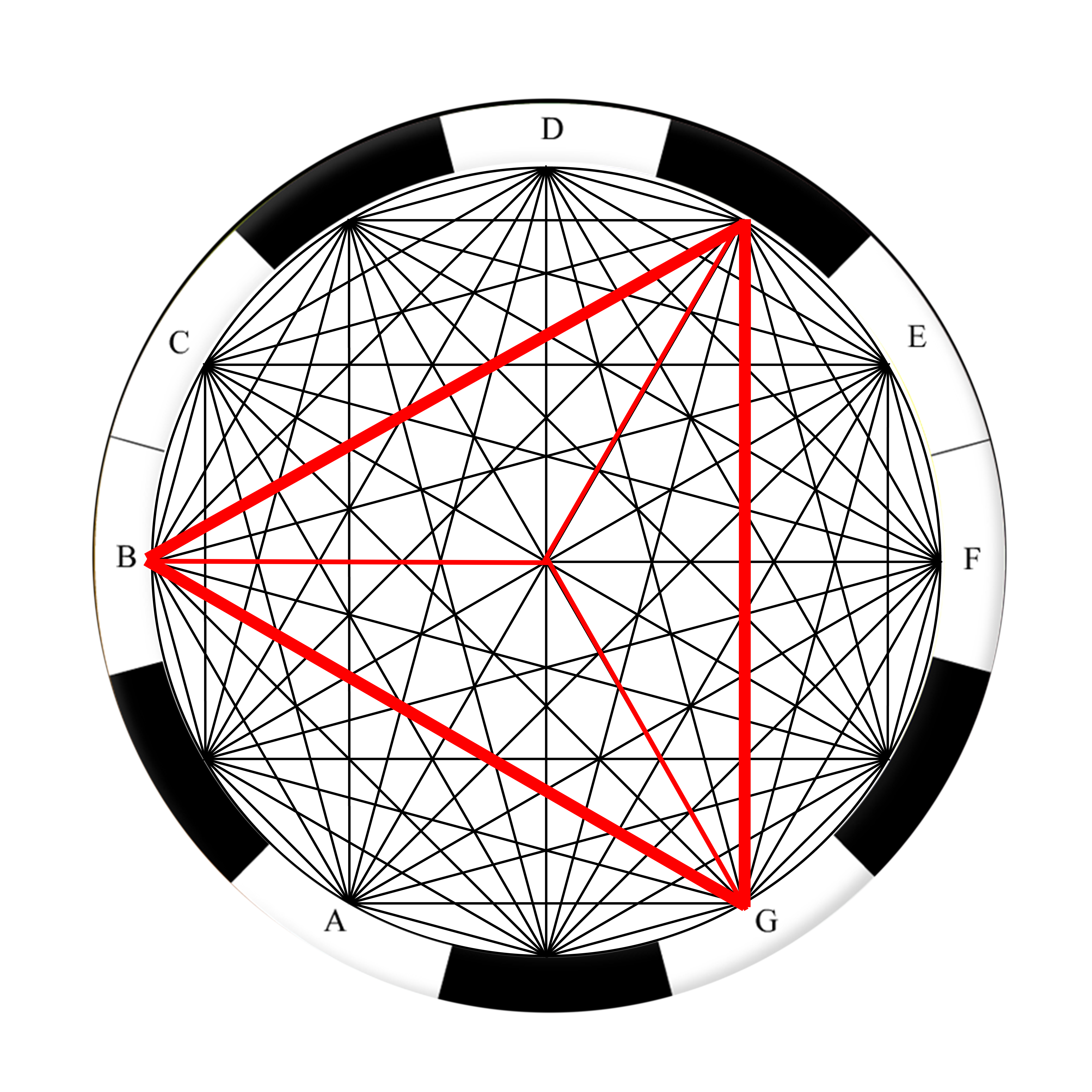
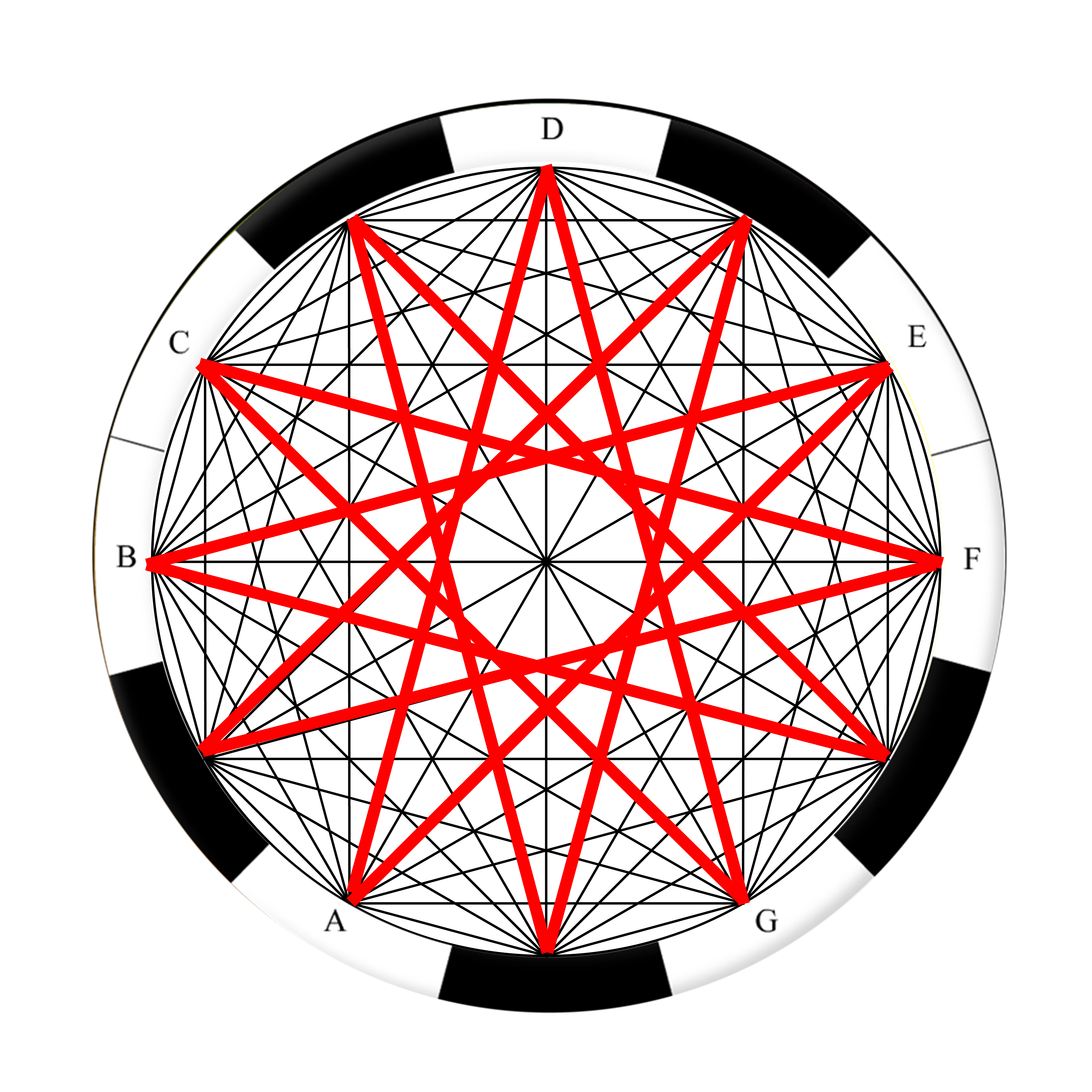
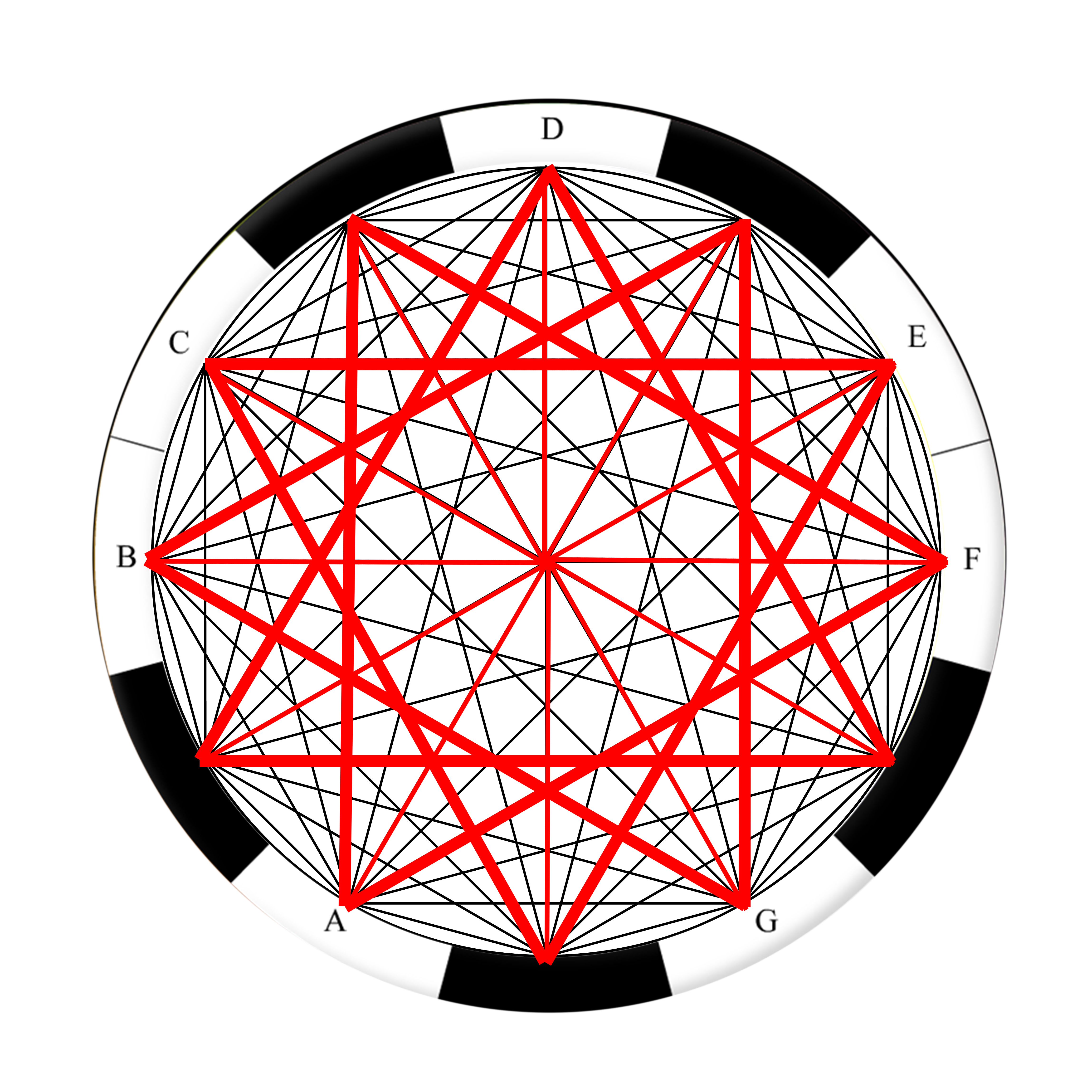
4 - major 3rd (4 semitones)- This is an augmented chord. It plays 3 notes before repeating. It divides the circle evenly in 3. There are 4 augmented chords (3x4=12):
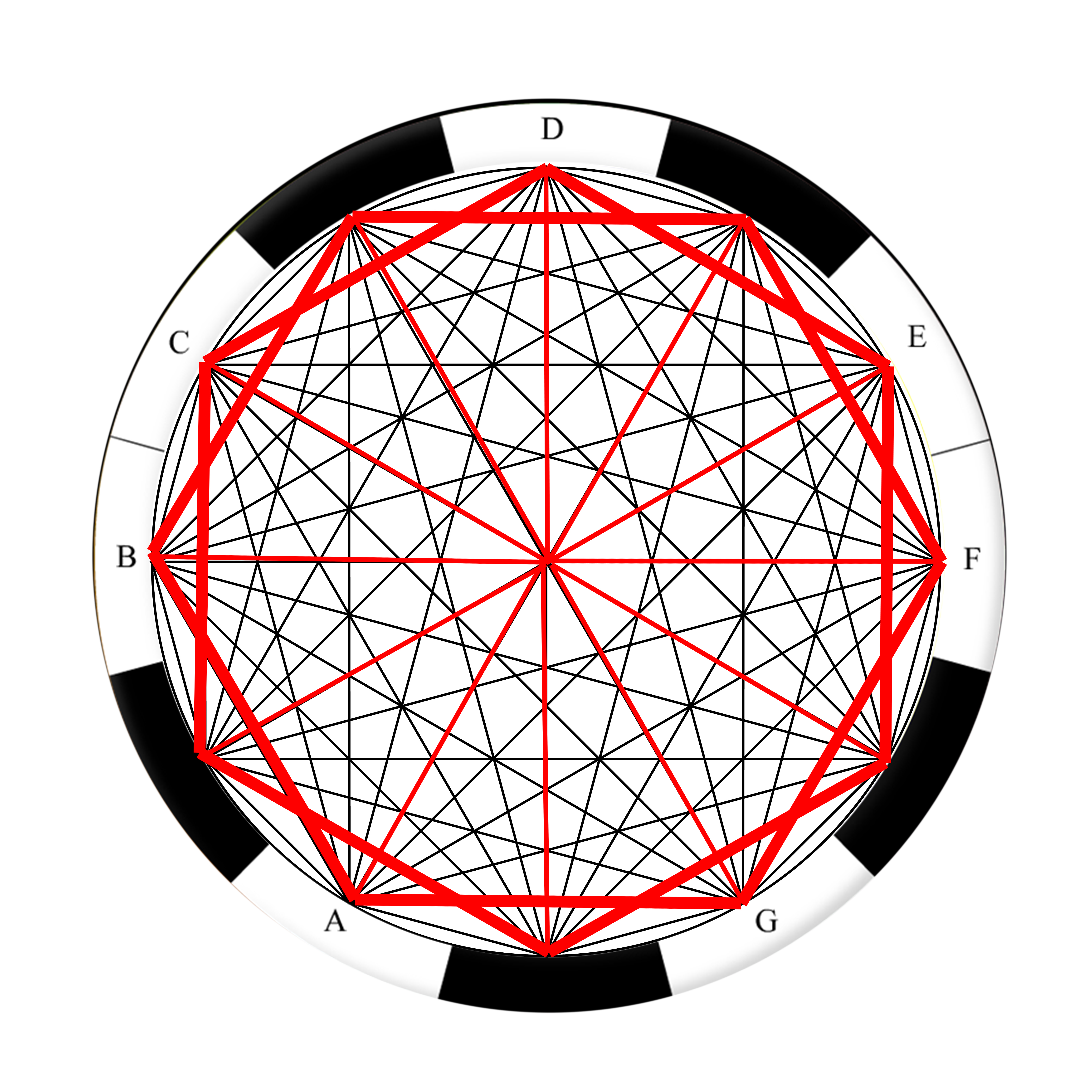
5 - perfect 4th (5 semitones) - this cycles down through the circle of 5ths and hits all 12 notes before repeating. (1x12 =12)
6 - augmented 4th/diminished 5th– (6 semitones) This goes back and forth between 2notes. It divides the circle evenly in half. There are 6 diminished 5th intervals (2x6 = 12):
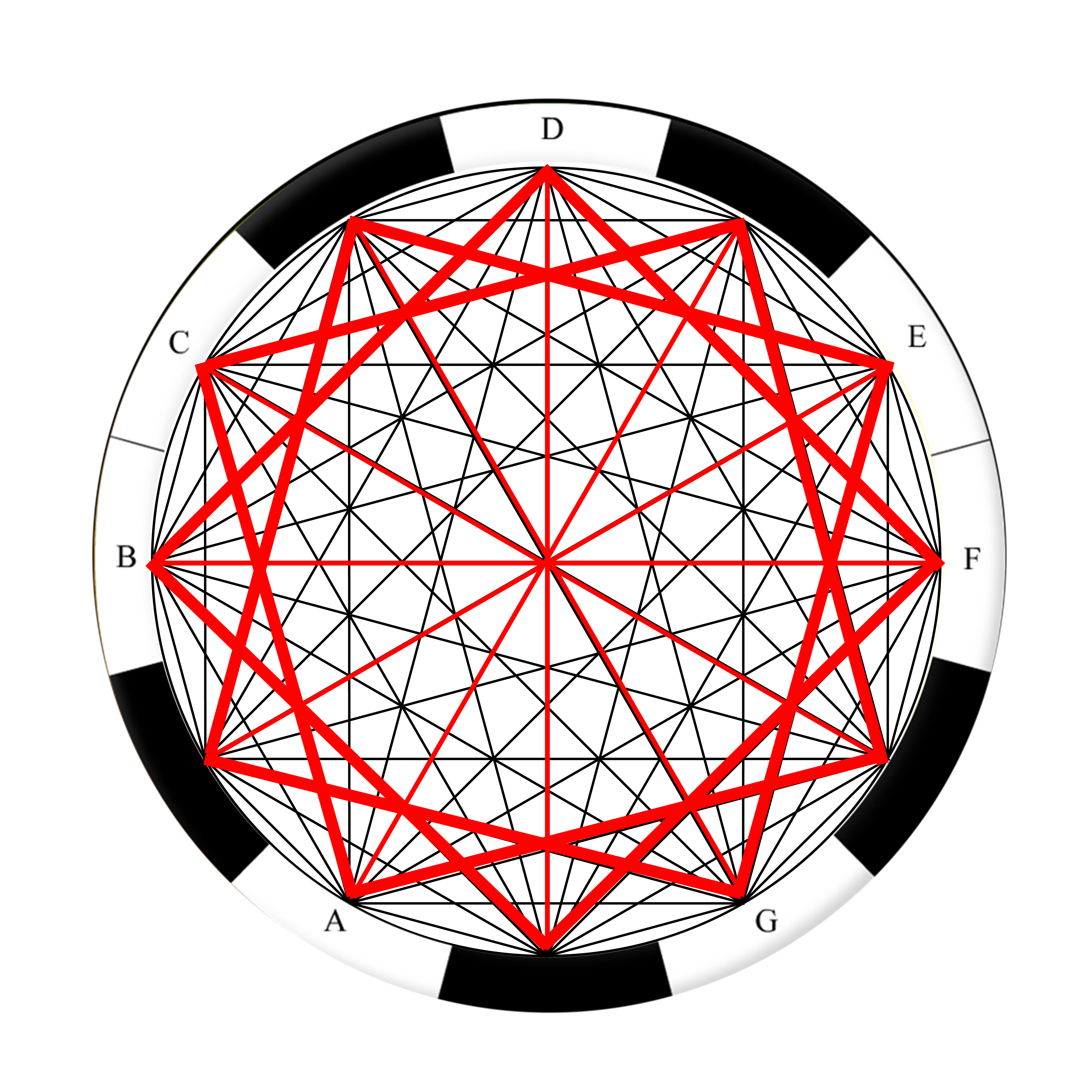
7 - perfect 5th (7 semitones) - this cycles up through the circle of 5ths and hits all 12 notes before repeatng. (1x12 =12) same as perfect 4th:
8 – minor 6th (8 semitones) same as Major 3rd :
9 – major 6th (9 semitones) same as Minor 3rd :
10 – minor 7th (10 semitones) same as Major 2nd
11 – major 7th (11 semitones) same as minor 2nd
Each line on the harmonisphere, therefore, measures two intervals, same two notes,but inverted:
Minor 2nd - Major 7th
Major 2nd - Minor 7th
Minor 3rd - Major 6th
Major 3rd - Minor 6th
Perfect 4th - Perfect 5th
Diminished 5th - Augmented 4th
Symmetry
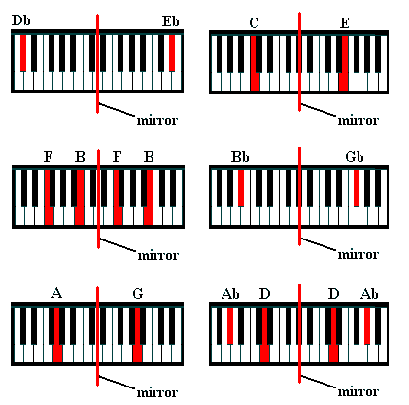
The geometry of music is all about symmetry and mirrored pairs. You can see the symmetry in music using a mirror and a piano. There are two spots where the mirror shows what’s really there, across the D note and across theAb(G#) note. The notes that are mirror images of each other in either picture are: Db-Eb, C-E, B-F, Bb-Gb, and A-G. Ab and D are reflections of themselves:
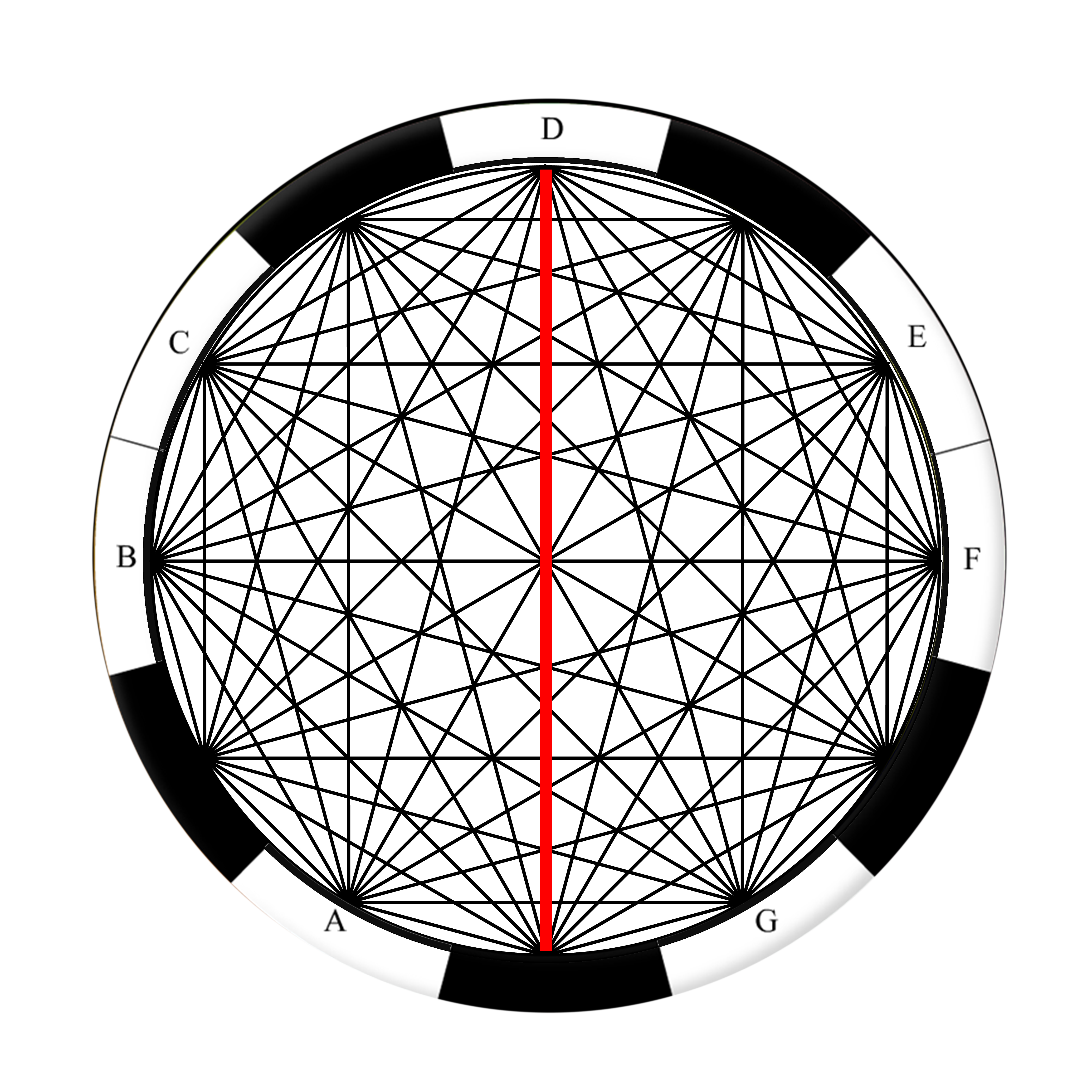
On the Harmonisphere, the same note pairs are reflected across the mirror. The mirror goes from D to Ab. D and Ab reflect themselves.
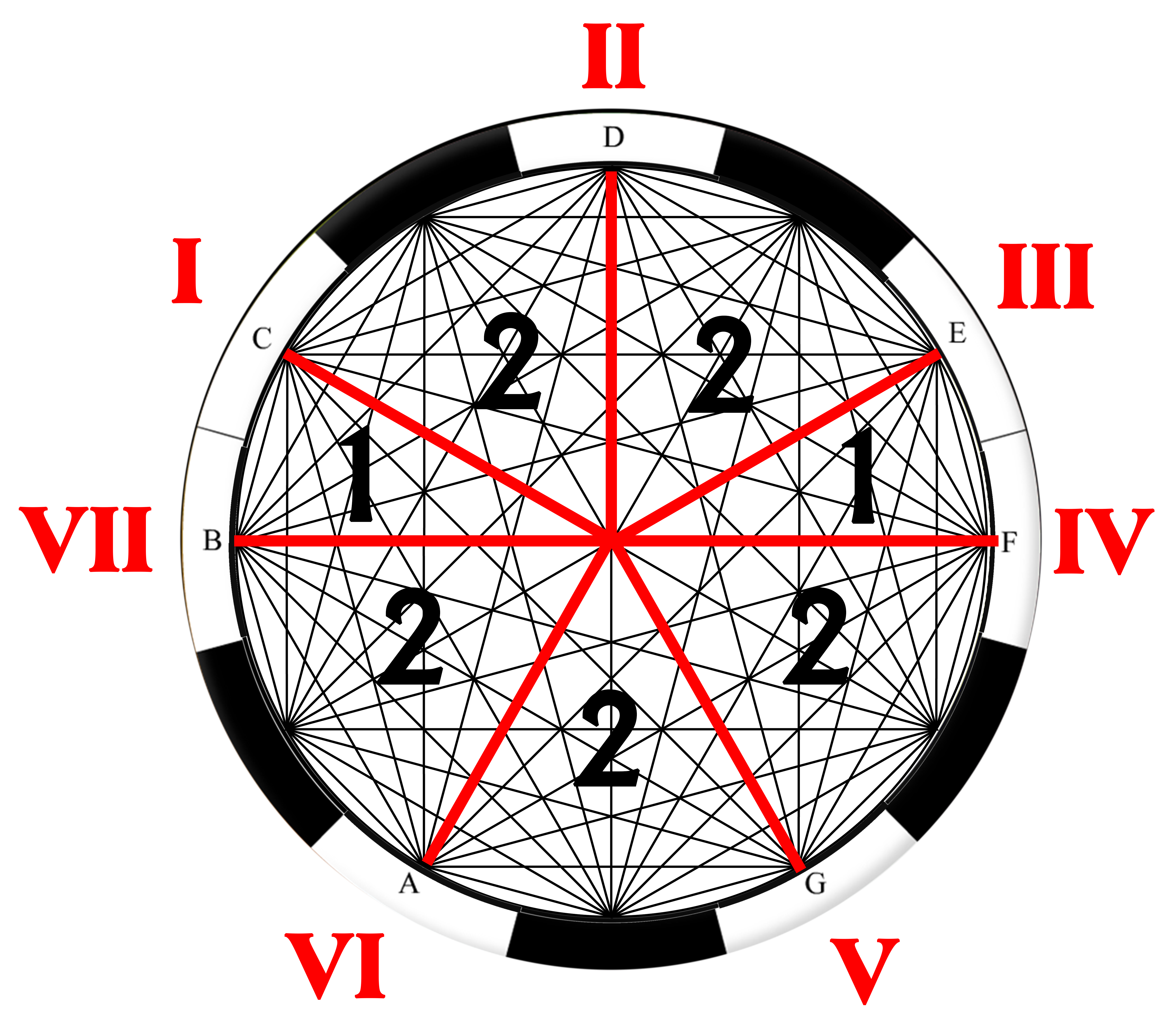
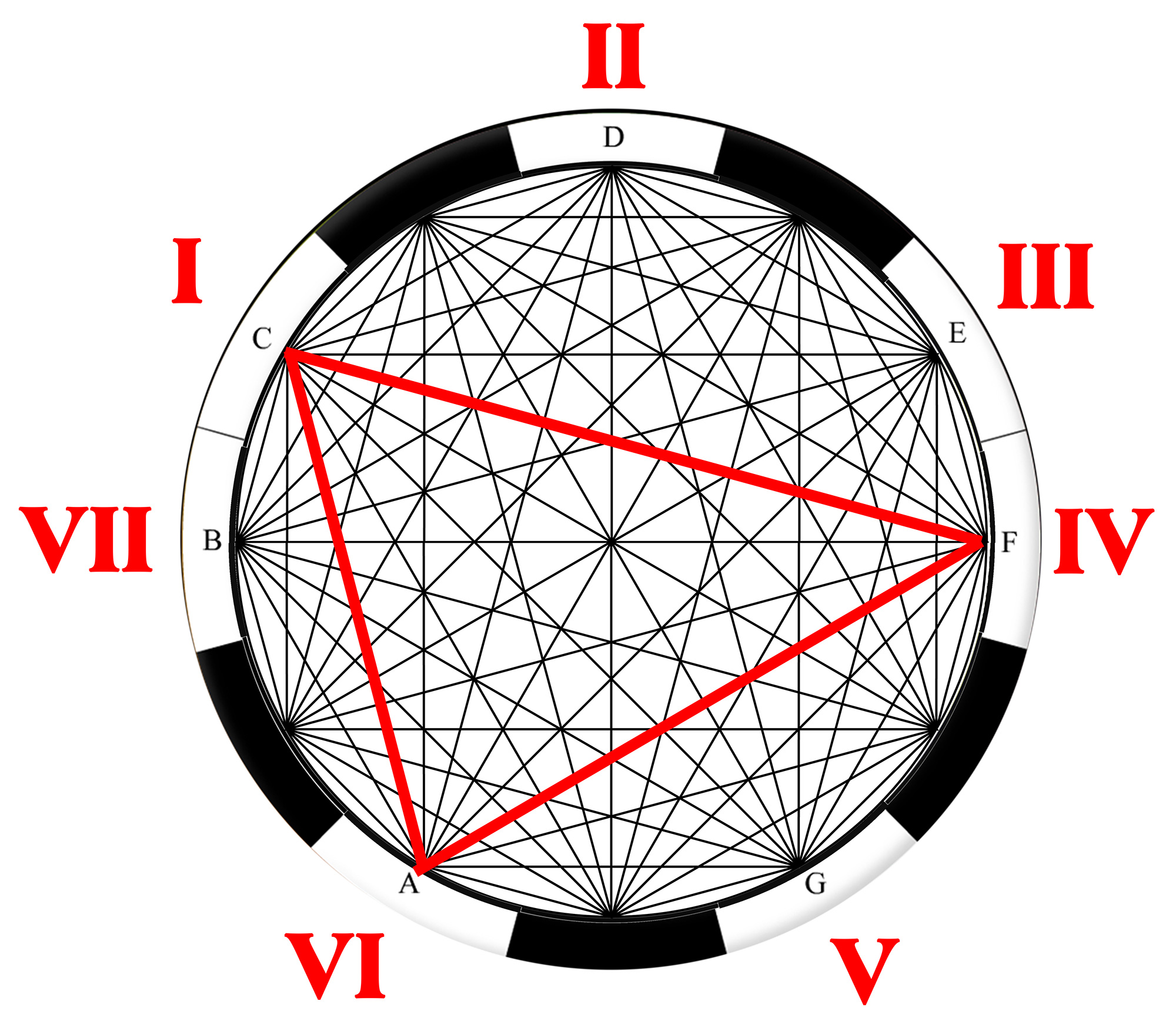
Each key has seven notes. This is the key of C. The seven notes (I, II, III, IV, V,VI, VII) are arranged symmetrically, so that each side is a mirrored image of the other. The seven note scale is Do-Re-Me-Fa-So-La-Te. It is measured (clockwisefrom the I) 2 semitones, 2 semitones, 1 semitone, 2 semitones,
2 semitones, 2 semitones, 1 semitone
Using the 7 notes and playing every second note creates seven 3-note triads that makeup the seven chords in each key. This makes 7 chords; 3 major chords 3 minor chordsand one diminished chord.
I, III, V
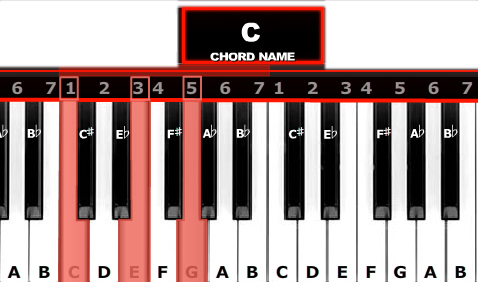
II, IV, IV
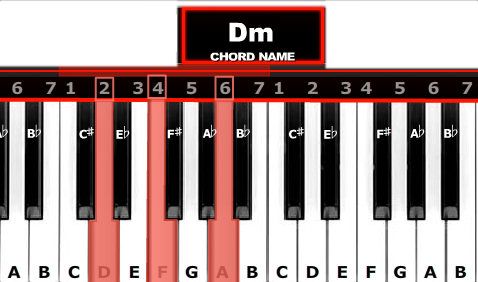
III, V, VII
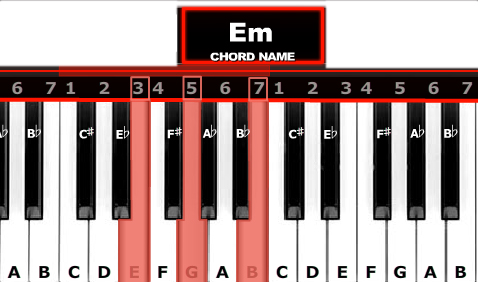
IV, VI, I
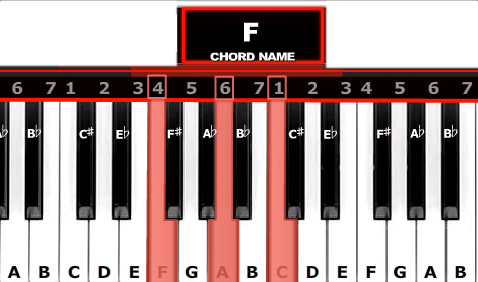
V, VII, II
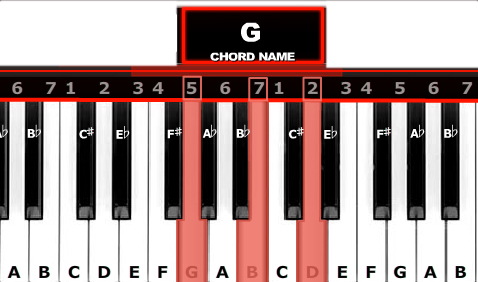
VI, I, III
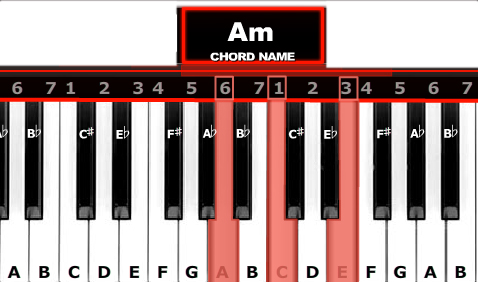
VII, II, IV
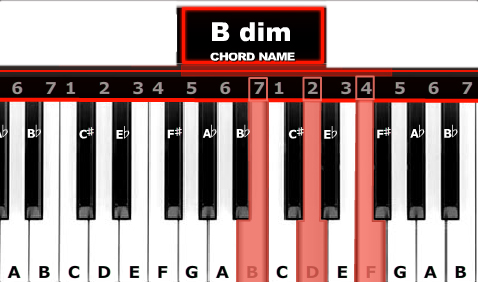
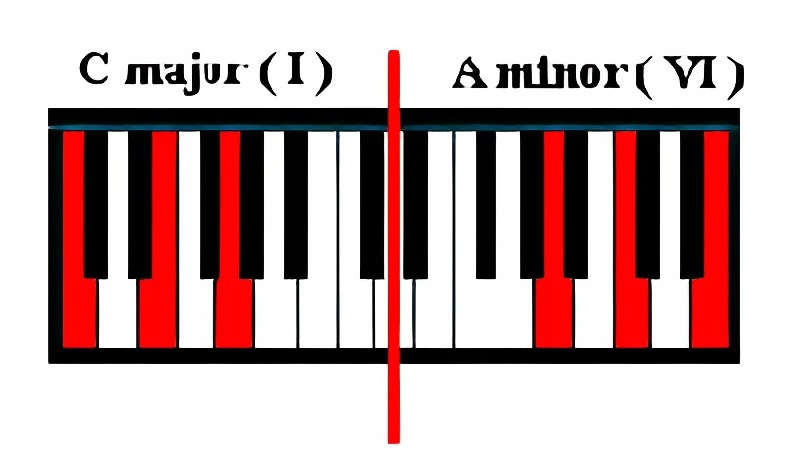
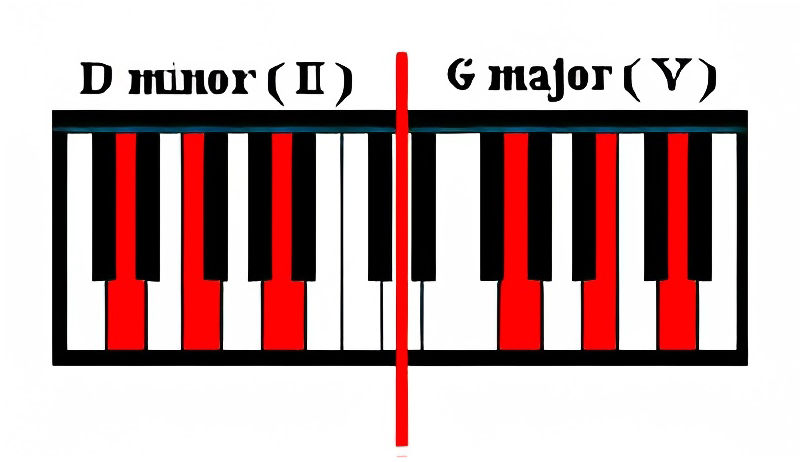
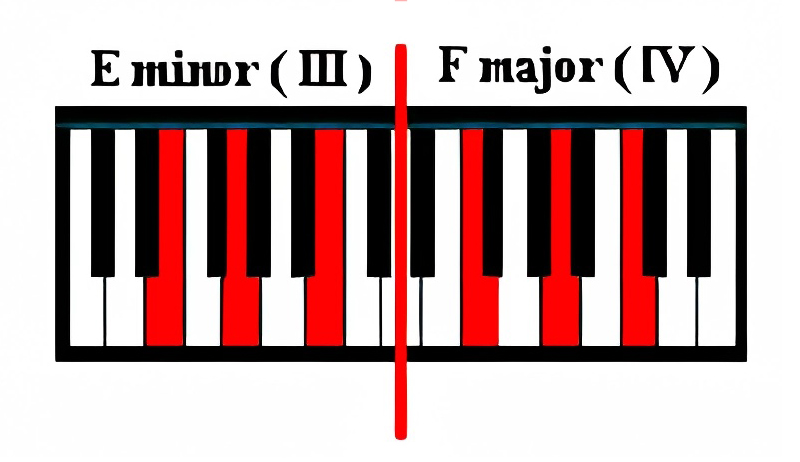
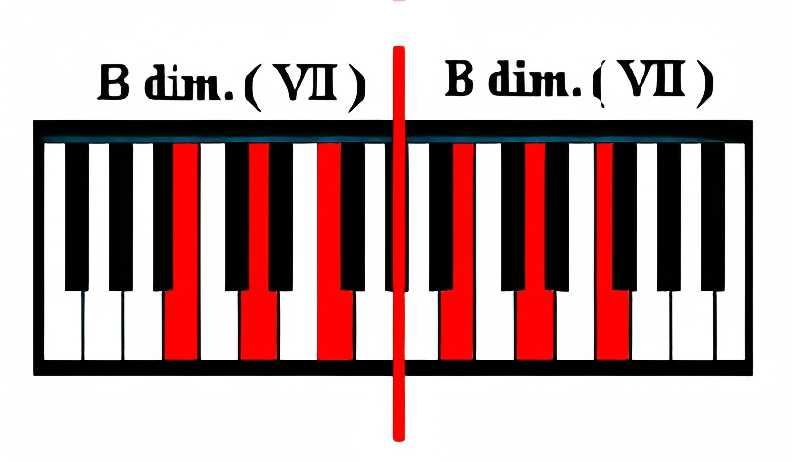
The three major chords and the three Minor chords are displayed as three mirrored pairs on the piano:
I(major) – VI (minor),
II(minor) – V (major),
III(minor) – IV (major)
The diminished chord is a mirror of itself:
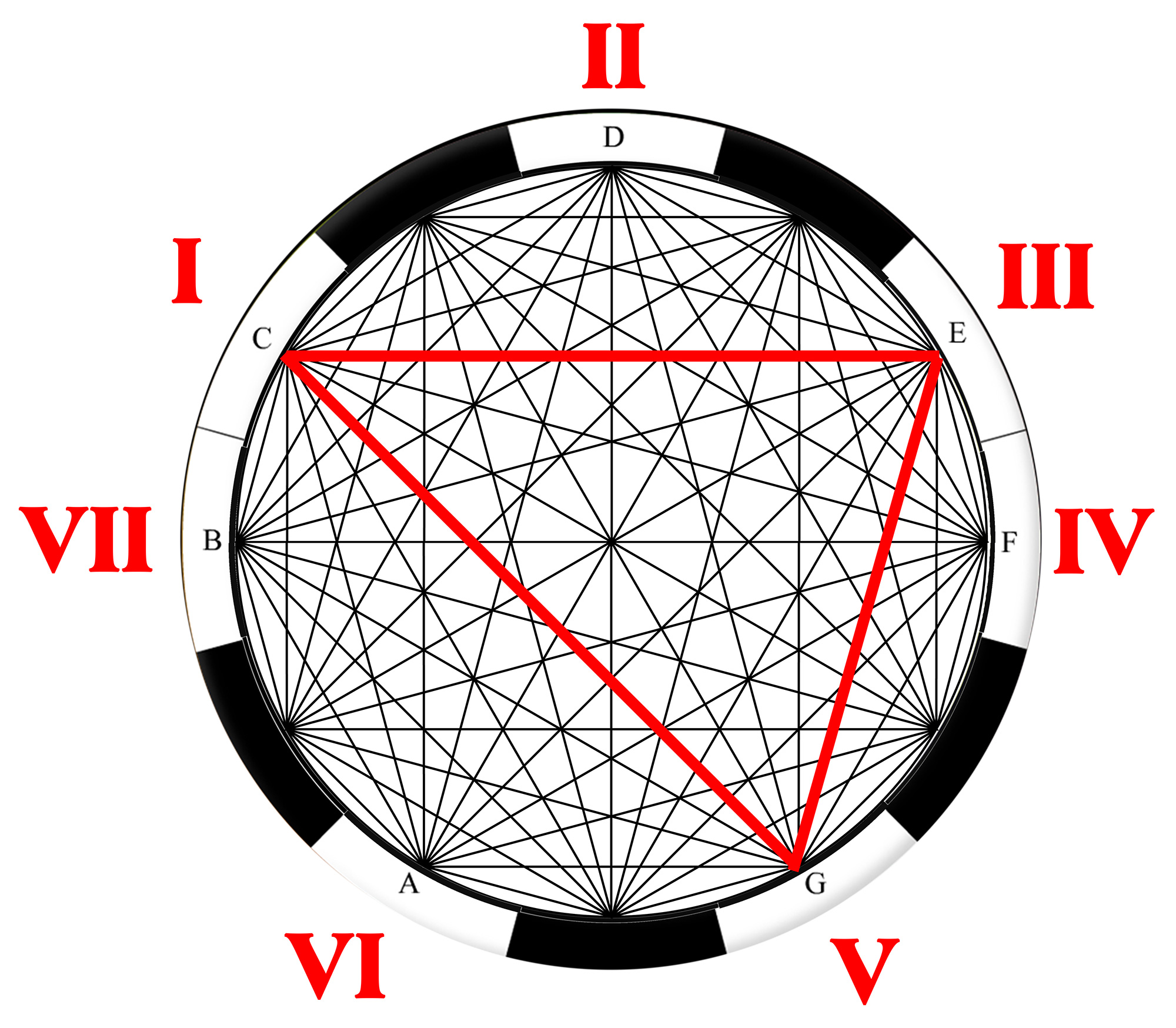
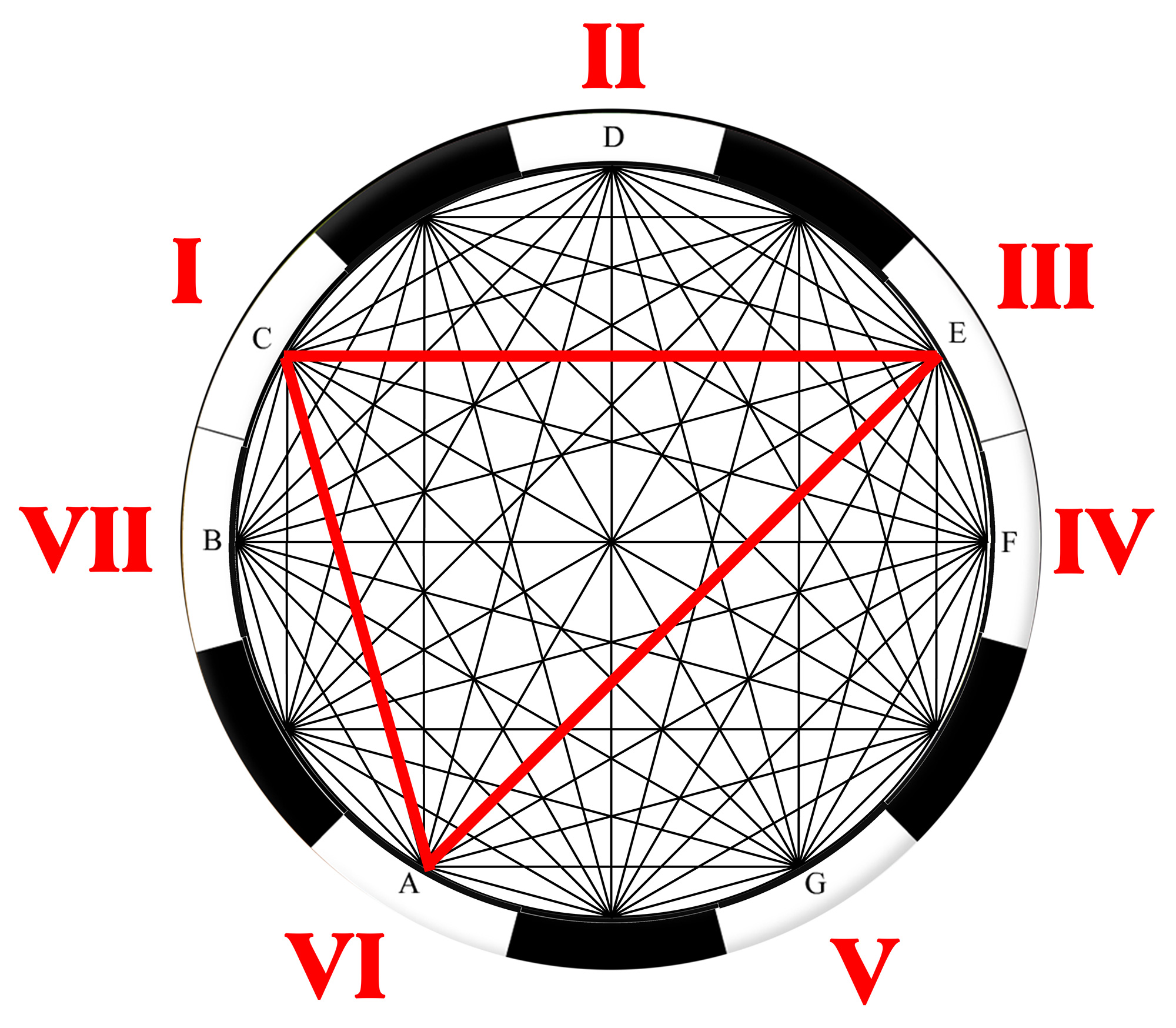
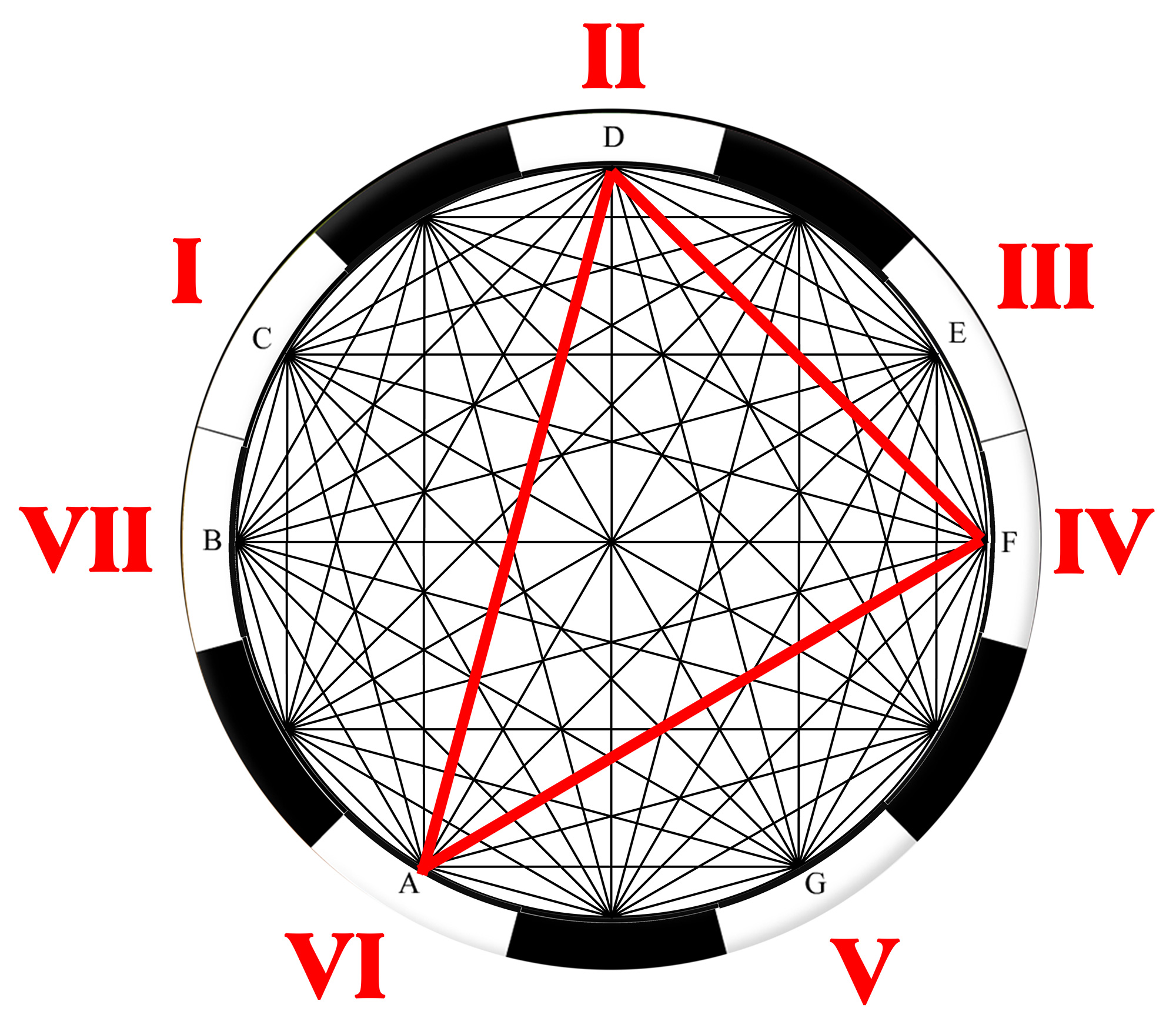
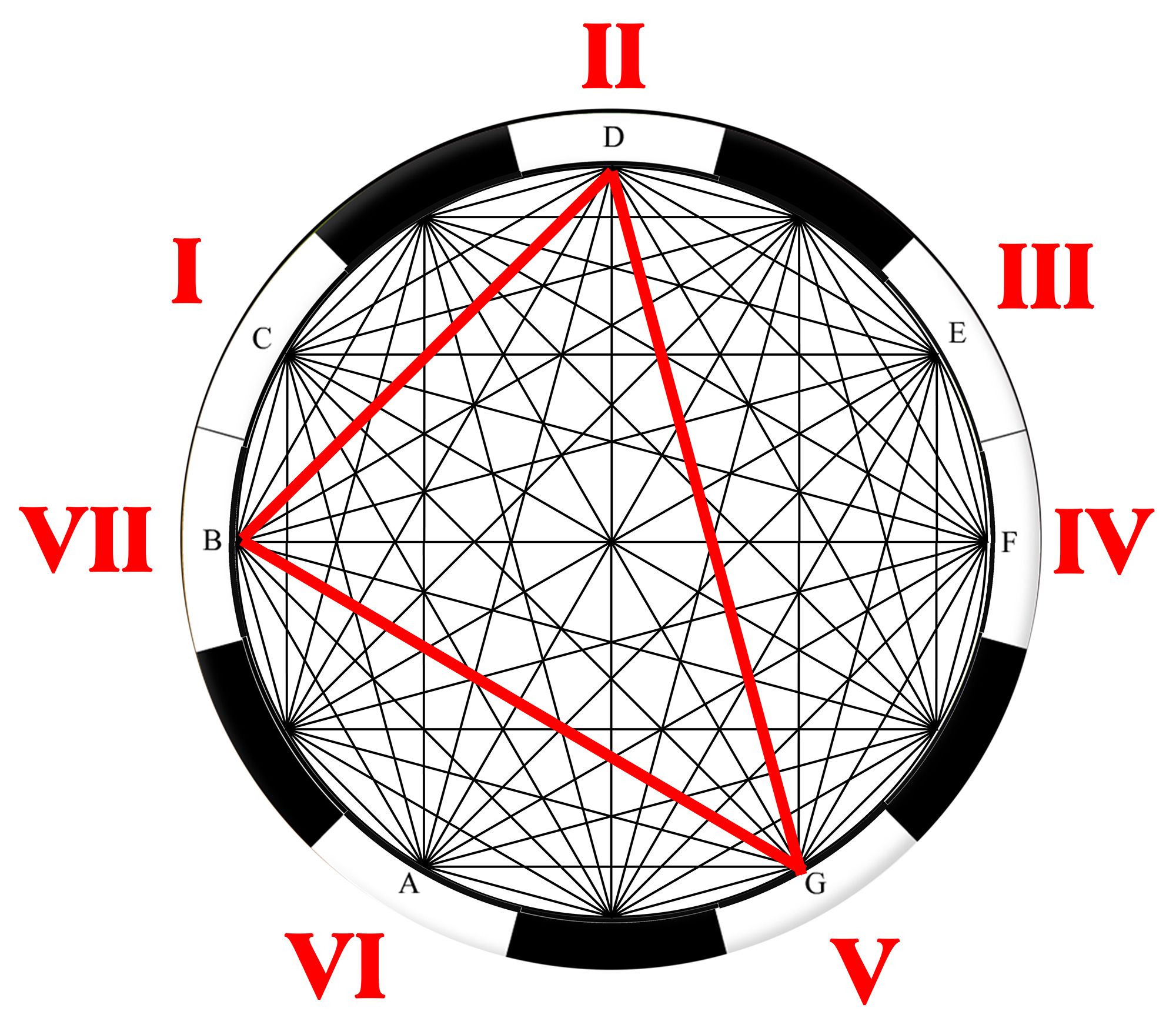
The same mirrored pairs of chords also occur on the Harmonisphere
(with the mirror going from D – Ab)
I(major) – VI (minor),
II(minor) – V (major),
III(minor) – IV (major)
The diminished chord is a mirror of itself:
I (C major)
VI (A minor)
II (D minor)
V (G major)
IV (F major)
III (E minor)
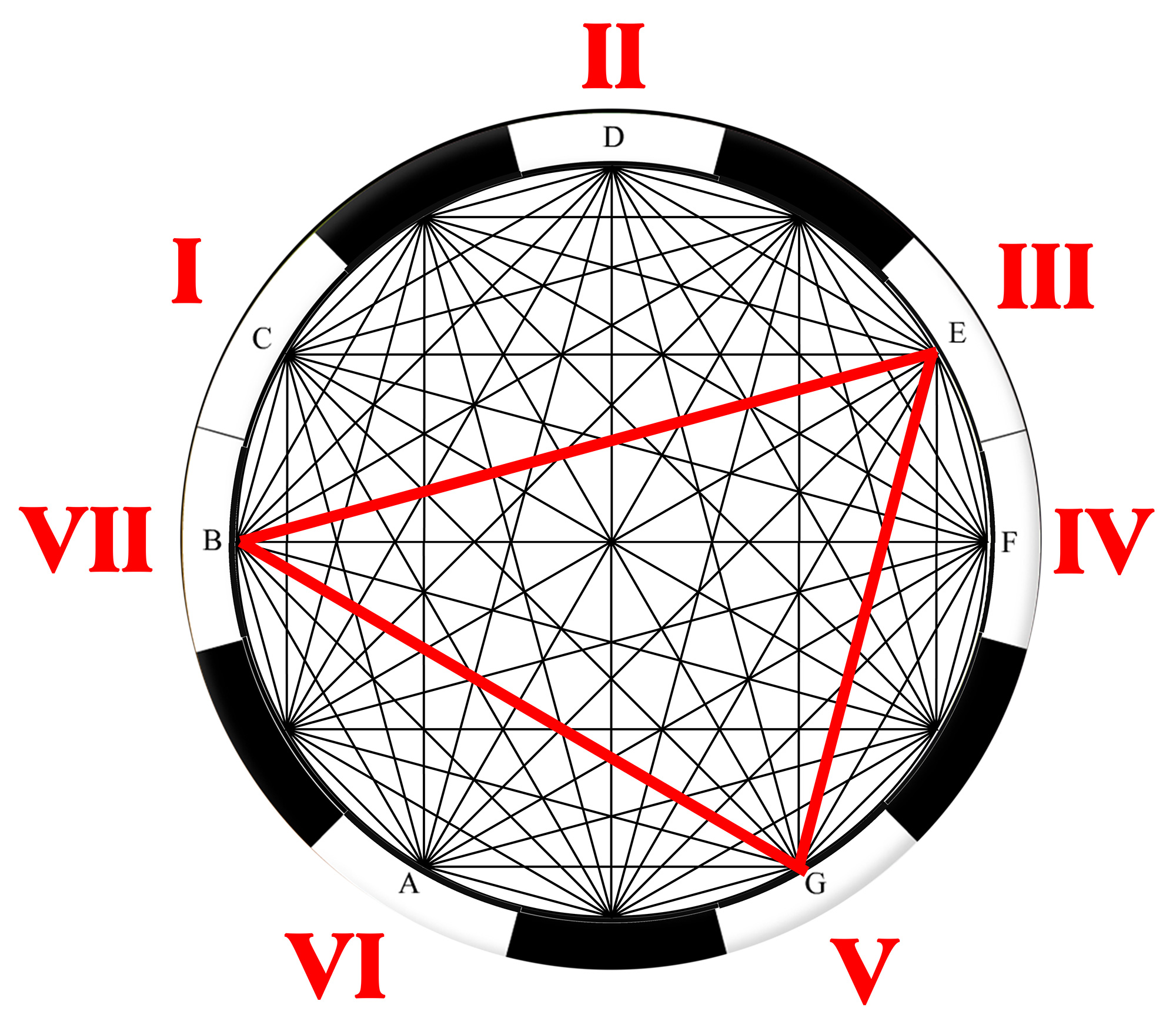
VII (B diminished)